
Prefer audio? Listen anywhere
Global business leaders are operating in a landscape where the old rules of trade, governance, and leadership no longer hold steady. Free markets face protectionist pushes, trust in global institutions is eroding, and geopolitical rivalries add layers of uncertainty. For leaders, the challenge is both economic and existential; how do we create resilient organizations when the very frameworks we rely on are in flux?
🎙️ Guest
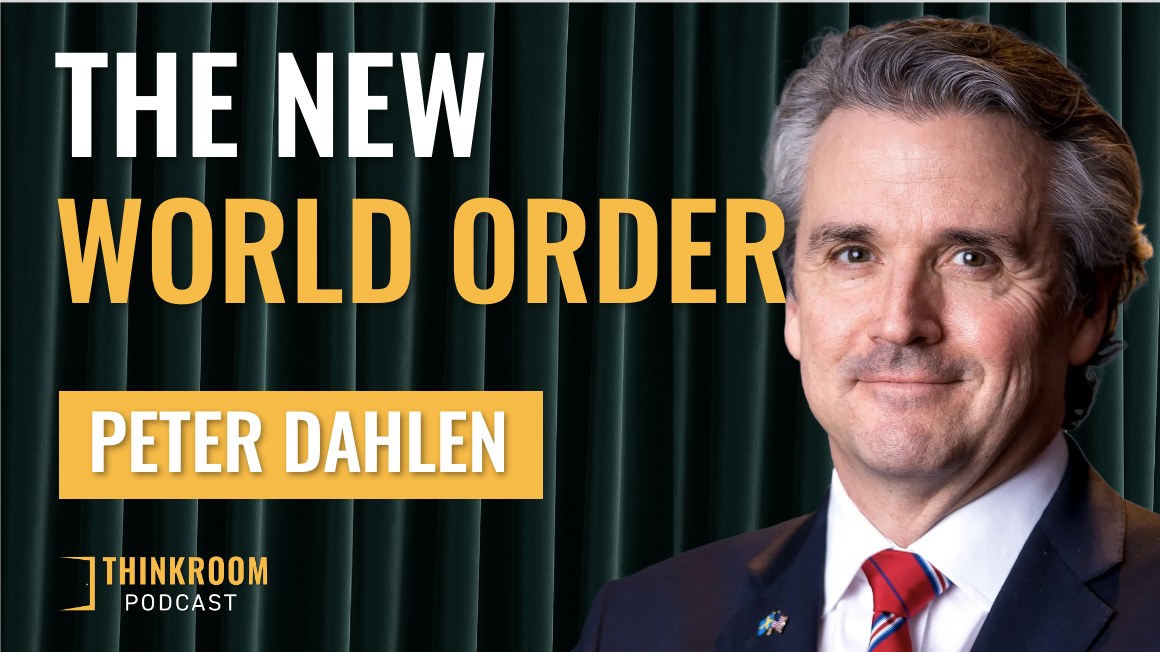
In this episode, Peter Dahlen, Managing Director of the American Chamber of Commerce in Sweden, shares a unique vantage point shaped by decades in Washington, work with Joe Biden’s Senate team, and over a decade of bridging US and Swedish business interests. His reflections cut to the core of what it takes to lead when stability itself is no longer guaranteed.
What makes his voice compelling now is his grasp of both systems: he has seen democratic ideals tested in practice, and he’s on the frontlines of navigating the business consequences of today’s geopolitical tensions .
🔥 Key Insights
✅ Uncertainty as the New Normal
When even long-term allies turn protectionist, how should leaders make investment decisions without reliable rules of the game?
✅ The Myth of Pure Free Markets
Every economy engages in “non-market” activity, but what happens when systematic state-driven strategies challenge the very foundation of capitalism?
✅ De-risking vs. Decoupling
Why the future of global trade may not be about cutting ties, but about selectively choosing partners based on shared values and security .
✅ Competitiveness Reframed
Sweden’s innovation culture shows that competitiveness isn’t just about fierceness - it’s about transparency, rule of law, and long-term trust. What might US leaders learn from that lens?
✅ Democracy as Dialogue
Polarization and cancel culture weaken not only politics but business too. How can leaders re-learn the art of disagreement without division?
Read the full transcript
\[00:00:00\] **Johan:** Peter Dian welcome. You have a Swedish sounding name, but you're actually an American. Uh, so for people who don't know you and your work, what is it that you do and, and why does that feel like an important mission in life for you?
\[00:00:11\] **Peter:** Yeah, so I have Swedish roots. My father's father and his entire family work immigrants from Sweden to Minnesota.
Hmm. Uh, but I'm mostly Irish, Swedish, last name, and I work for the American Chamber of Commerce in Sweden. So for us, the, our mission is promoting trade and investment between Sweden and the United States.
\[00:00:32\] **Johan:** Yeah.
\[00:00:32\] **Peter:** The, the mission appeals to me because I like to. Build bridges and connect people, and that's what I spend the bulk of my time doing, connecting people that run the businesses.
\[00:00:43\] **Johan:** Yeah. And you had an early, uh, interesting early career as well. Uh, so you come from legislature, if I understand it correctly, and work with specifically the Biden administration.
And can you tell us a bit about your time in Washington?
\[00:00:55\] **Peter:** Yeah, so I'm a lawyer by training. I practiced law for a couple of years and then went into, uh, public service, started working for then Senator Biden, uh, and worked with him both on his 1996 reelection campaign in Delaware, where I'm from. And then in Washington I was one of his senate judiciary committee lawyers.
\[00:01:18\] **Johan:** Do you ever have the feeling looking back that you're kind of. Been part of, of building all of these rule sets and a little bit watching it crumble as well over time. Is that something that's just a natural progression of life because societies change and then cultures become different?
Or, or, and especially talking about now with, with the trade stuff that you're involved with and, and, uh, promoting it is very different, uh, environment that you're living in now. Is there sadness and a, and a, uh, longing for, for the times that were, or is it just a natural part of life?
\[00:01:51\] **Peter:** I think it's a natural part of life.
I mean, sometimes I can be disappointed, especially when you read just the headlines. Hmm. Um, I mean, I am a lawyer at heart and, you know, I believe pretty strongly in the rule of law and transparency and good governance and, uh, I think, you know, that the, the US system is facing some challenges. Mm. Uh, and the global system as well.
But ultimately, uh. It's, it's working the way it should be working.
Hmm.
There are periods of time where like the checks and balances of the US government can be, um, tilted one way or the other. And right now we're going through a period where there's a lot of power in the executive branch. But these are questions that have been part of the, uh, us discussion around the, the, the republic itself and the constitutional framework going back to the, the, um, drafting of and, and ratification of the constitution.
\[00:02:52\] **Johan:** So I'm just taking my, my perspective now. Uh, so I'm a little bit younger than you, so I haven't seen as many cycles perhaps of, of ordering chaos and, and how order restores after chaos.
Um, and I'm not as deep into the kind of constitutional ideals and so forth, but there's a sentiment around the types of people I tend to discuss with, which is business people, senior leaders, that there's a fundamental kind of unraveling of, of the, the rules of engagement in a sense. Do you feel that that's true?
Is it some, something fundamentally different about this trade war that we have and then the kind of uncertainty that we face? Or is this Well, you saw the same thing back in, in, uh, I don't know, the oil crisis or, or wherever it might be.
\[00:03:41\] **Peter:** Yeah, it seems to me that there is, I mean, I haven't, I didn't really pay attention to trade until I took on this role 11 years ago.
Um, but I would say, I mean, I was alive during the oil crisis. I remember, I remember waiting in the car to get gas. You do, but I, I mean that's like, I was young. Uh, but the, I would say that there is a sense that there's a major shift, and it's a, I think it's important to highlight that the shift predates the current administration, right.
This, uh, can go back to the Obama administration and how the Obama administration was, uh, thinking about and dealing with the, with the w with the World Trade Organization and, um, dissatisfaction with how some non-market actors that were part of the WTO were, were. Leveraging the WTO to take advantage of the United States and others.
\[00:04:39\] **Johan:** So what's the definition of a non-market actor?
\[00:04:41\] **Peter:** That's a good question. Um, i, yeah. Com or countries that would, you know, subsidize their industries or otherwise, you know, engage in over capacity. Hmm. Uh, dumping their products in that, that they produce at a lower cost.
\[00:04:59\] **Johan:** Yeah.
\[00:05:00\] **Peter:** In other markets where the local markets can't compete because of higher wages.
Yeah. Um, and you
\[00:05:07\] **Johan:** especially doing it, what feels a little bit new, at least to me, is the systematic approach to it in a sense. So if you look at China, for example, the way that they absolutely subsidize certain industries to become completely market dominant, but it's part of a, a broader strategy for, for the Chinese economy, for example.
And that is. Again, it's one of those rules that kind of breaks the fundamental idea of, of capitalism that we have the most efficient player being the dominant player. But if you have countries subsidizing it, it's, it's a different dynamic.
\[00:05:43\] **Peter:** Yeah. And if they have lower wages and Yeah. Lower regulatory hurdles, um, lower environmental standards, uh, subsidies from the state so they don't have to compete in, in ter in, in terms of the sustainability of their business.
Hmm. It's, uh, yeah, it's, uh, I would say that's a non-market actor, but it's, it's fluid. Right. I mean, the Europe and the United States both have to do things to stand up some industries from time to time that are important for, uh, national security or for the economy. Yeah. The Obama administration did it with, uh, the auto industry after the financial crisis.
The Trump administration is doing it now with the, uh, uh. Chips, manufacturers, semiconductor manufacturing.
\[00:06:30\] **Johan:** Yeah.
\[00:06:30\] **Peter:** And, and the Biden administration arguably did it too with the CHIPS Act, which was meant to help the, uh, also help the, uh, semiconductor industry.
Hmm.
So it's a little bit about, uh, yeah, the pot calling the kettle black, but they're more systematic than others, I think would, would be the way to describe non-market actors.
Okay. I think every economy does some non-market act, engages in some non-market activity from time to time. Yeah. Stands up state, you know, state champions, uh, for, for industry, for any, any number of reasons. Uh, and yeah. A more systematic approach. Yeah. In other countries.
\[00:07:11\] **Johan:** What's the kind of inside view from, from the US around the tariffs that we see now?
Do we, because it, it's easy to have a. An outsider's opinion that this is a, a something that's almost intended to, to break the, break the game in a way. And it, it's, it feels almost aggressive from the outside. What's, what's kind of the insider's view? What are we not seeing?
\[00:07:35\] **Peter:** Hmm. Well, I think from a, like a long-term perspective, going back to the Obama administration and the financial crisis, and even before that, you know, there's been a, a perce, a perce.
It's not a perception, it's a reality. Like a lot of the manufacturing areas in the United States, traditional manufacturing areas have, uh, been suffering for decades in terms of job loss. Mm. And, and American politicians have struggled with the formula for how to reset that. Hmm. And jobs have moved away.
Sometimes they moved to other parts of the country, like the auto manufacturing is quite large now in the southern United States. Hmm. Uh, um, the. I think so for tariffs in particular, tariff, the, the power over commerce is a congressional power expressly stated in the constitution. Congress has for years been delegating that power to presidents.
\[00:08:36\] **Johan:** Okay.
\[00:08:37\] **Peter:** So tariffs, tariffs are part of trade policy. They've been delegated to the president for, uh, more and more over the last 70 years or more through various statutes. And President Trump started using them more in his first term. President Biden expanded those, didn't pull them back, expanded some, and now they've been, uh, expanded more than they have been probably in 70 years.
\[00:09:07\] **Johan:** What do you feel. I grew up being trained as, uh, within political philosophy. And obviously there's this tension between America as the ultimate guardian of, of a free capitalism and liberalism. But then you have this kind of big streak of protectionism going into it, and there's that huge tension between the two.
Uh, where, where is the public sentiment currently in, uh, in the policymaking of, of us. And and how do you think they kind of reconcile? 'cause it's almost like an identity, right? We stand up for free trade liberalism, but then drive all of this protectionism. And in terms of policy, where, where's the, the kinda self identity landing right now?
\[00:09:51\] **Peter:** That's a good question, and I don't know if I have a good answer, but I think it, it's, there's pretty much bipartisan consensus that, you know. We're not gonna be pushing for free trade agreements anytime soon.
Hmm.
And why not? Well, 'cause I think that, again, there's a bipartisan consensus that these agreements haven't worked.
I mean, they've worked, there's been some winners and some losers, but, uh, yeah, the US middle class has been kind of hollowed out for any number of reasons. Not all because of free trade agreements. Hmm. But I think there's a struggle now between the parties to, to claim that voter base,
\[00:10:34\] **Johan:** yeah, exactly. But it's such an interesting question because it, it doesn't come down to, to one specific thing either, right.
In terms of why did the hollowing out of the middle class happen? Because everybody can kind of agree to, to the statement that there's a big difference between the middle class of America now versus the, the sixties or, or fifties or whatever, and people look back and, and remember it fondly perhaps, or idolize it, but making the conclusion that it's, it's down to, to the, the wrongness of free trade is, is quite of a jump.
\[00:11:07\] **Peter:** Yeah. And I, I don't think no one serious is saying that's the only reason. No. That it's a per, it's, I think it's a widely held belief that free trade has not worked. It, it not really inured to the benefit of most Americans. Yeah. And so, uh, it's just a. Question of recalibrating. I listened to a podcast just the other day with, um, Michael Romman, who was the, uh, he was the US Trade representative in the second Obama administration and, and negotiating TT for example.
And he was talking about the, this was, uh, the Bloomberg podcast, odd lots, um, talking about, uh, how trade is now becoming polyamorous instead of, instead of, uh, like the global order that we set up Yeah. After World War ii. And so we'll, kind of like-minded nations banding together where it makes sense. And I think it stands to reason that that's the way things will probably go.
\[00:12:11\] **Johan:** Can we extrapolate some of the consequences of that? And specifically for, for this audience who, who are not. Explicitly policy makers or politicians, really, they're, they're more business people.
And I would imagine that this then has ripple effects into the, the kind of private sphere of, of, of business.
\[00:12:28\] **Peter:** Well, I'm, I think it bodes well in, in the long term for the EU US relationship. Okay. Uh, just because there are things that both, both continents produce that we, that we both need. Hmm. And there, there are shared values I think that are important there, especially if you think about security.
Hmm. And without security, you, you can't. Do any of this, we can't even have this conversation in some countries. Right. So, um, I think it starts with that there are many reasons for Europe and the United States to cooperate within NATO and, and more broadly on security issues. And, uh, uh, it makes sense that they would continue to cooperate too on, on things like, uh, critical, critical rare earth minerals, which both, which everybody needs for the green transition, at least as it's currently being, uh, designed in terms of the need for rare earth minerals, at least for batteries and electrification.
\[00:13:31\] **Johan:** I mean, it's interesting 'cause I, I would imagine that, 'cause obviously from, from a a business perspective, it's gonna be way easier to, to make. Supplier deals with, with countries where your, your country politically is, is quite well aligned because all of the import rules or export rules are gonna be smoother.
Um, and if this landscape is changing, it's gonna be more difficult, for example, to have Chinese, um, suppliers, then that will have a, an impact down the line. And then what, what's opening up, what's, what's closing down? And I think what's one of the things that's been kind of frustrating from the CEO perspective, for example, is just a sheer level of uncertainty.
Like where will this land? And there kind of ends up being some type of paralysis. Like we, we have the money to invest, but we don't have the, the kind of fundamental security and optimism about the future that we are actively investing. So it's kinda a wait and see almost during a headlight syndrome that, that is kind of holding the economy back as well.
There there is a lot of fundamental stuff in the economy that, that are quite positive, but still not taking off.
\[00:14:40\] **Peter:** Yeah. No, I think that uncertainty is like, that's the, the word I hear. Yeah. The most, and totally understandable as to why there is uncertainty. But if you, again, looking back to the Obama administration, whether it's on like the erosion of faith in the multilateral trading system.
Hmm. Or also where America foreign policy-wise was directing its attention.
Hmm.
President Obama announced publicly, like, we're turning our attention to Asia. Our focus is on Asia. Hmm. That is like, we're not turning our back on Europe. Europe's still our friend Ally partner. This is where we see like the threat Yeah.
Is the, or the competitive threat. And, um, and of course the Putin's War of Aggression, Ukraine changed that to some, to, to a large degree. Uh, but Europe is standing up now as a more equal partner on defense issues, which I think is only good for the transatlantic relationship. And this Europe's response to, to, to the threat from Russia in terms of defense spending.
\[00:15:47\] **Johan:** Okay.
\[00:15:47\] **Peter:** Maybe there's gonna be decoupling around things that are explicitly tied to security. Hmm. Like, uh, advanced chips for AI and critical raw minerals.
But, uh, de de-risking is, is still the, I think the word of the day, not decoupling.
\[00:16:06\] **Johan:** How do you see this playing out over like 10, 20 years? Or are we seeing fundamentally collapse of a system that at least my generation has been u very used to as the natural order of things? Or is it more a kind of gradual progression, but we're so intertwined economically that it's not gonna be that decoupling that you're talking about?
\[00:16:28\] **Peter:** Yeah. Well, I, I see like, uh. A post-World War II trading order. Okay. To some degree is, is coming undone. Maybe it can be restored. Um, but really it can only be restorative. All of the partners, all of the parties to that treaty, all the members of the WTO trust it or trust it and, and want it to, um, actually that they have to trust the process of restoring it to a, to a point where they can all feel like it benefits them.
Um, I haven't given up hope that that might happen. Mm-hmm. But, uh, if that doesn't happen, then it'll be more of a working with allies.
\[00:17:17\] **Johan:** There's this expression that every generation has to, to kind of conquer their own relationship to freedom and democracy.
And at least I worry that I, it was probably so clear in the, in the post World War era that the simple value of peace is huge. Mm. So back when you talked about like, has free trade benefited us, it's, it's kind of easy in, in a, in a period kind of defined by at least world peace, even though there are, are pockets of, of local wars have been going on all the time.
But in general, world peace, you start carrying higher up in, in the kind of hierarchy of needs and, and you start really looking into the nuances of things and devaluing. The baseline fundamental, uh, things and, and they are kind of less important and almost like you're idolizing Yeah. Strong man. We stand up for, for, uh, more aggressive stances and we, we claim what's ours.
And, and that to me is frightening. And it's not just happening in the states, obviously it's happening all over the world. We have similar politicians in the, in the eu. I, I think probably Brexit was a similar, uh, like sentiment. We have strong men around the world that are rising. But that's a very, to me, at least dangerous and, and scary path.
\[00:18:41\] **Peter:** Yes. I mean, I fully believe in democracy, but I, and um, but I think the path forward for that is that we have to, we have to engage with each other. Hmm. Like you, we can't continue to. Cancel each out, cancel each other out. I'm not talking about just like, cancel culture on television. I mean like, people around the table.
Like who do you have around your, you know, dining room table? Mm. Who is in your, um, circle of friends? Who, and what, what do they have to do that gets them cast out? Uh, 'cause I think people of good faith can say the wrong thing sometimes. Or maybe they just need to, maybe even they think that what they've said and then, but casting them out is not the way to, to have a conversation or develop policy and democracy.
We have to learn ways to talk to each other. Yeah. Even, uh, well I mentioned the book, love Your Enemies from Arthur Brooks, which is exactly that. You know, he said if you believe in democracy, then you have to be grateful for even love the person on the other side. You don't have to agree with them, but you need to sit down.
\[00:19:53\] **Johan:** Yeah.
\[00:19:53\] **Peter:** Be grateful that they're there expressing their opinion. And have the conversation. Yeah. That's the only path forward for if you is for democracy.
\[00:20:03\] **Johan:** It's so interesting how culture and the things that we are talking about, that they're kind of fundamentally the same thing. And we're all kind of reeling from, from the news of, of Charlie Kirk, obviously as an, the latest example of the inability to respect the enemy in a sense.
Mm. And, and kinda separate that. And I think what you're speaking to now is so important and it's a choice we all make. Right? You, you talk about your circle of friends, the people that you have at your dinner table, and I think there's been this long, long push for, for trying to live more and more and in a filter bubble and it's accelerated by our technology as well and algorithms and everything like that.
And it's something fundamentally broken in a society when you can't have disagreement of, of ideas. Become fundamentally an ostracizing of people from your community.
\[00:20:57\] **Peter:** Yeah. And we have to get back to like, um, what our grandmothers and parents have taught us or like to disagree without being disagreeable.
\[00:21:06\] **Johan:** Yeah.
\[00:21:07\] **Peter:** And I think regardless of like what you think about the politics of someone like Charlie Kirk, I mean, he was arguably doing politics the right way. He was showing up, going to campuses, talking with students, and this is what you should be doing on college campuses. You should be having a robust argument about whether it's conservative values or, um, the Middle East.
Uh, this is where those arguments should be had. Yeah. I mean, it's a learning environment. Yeah. Don't have to agree with the people, but I think engaging, it's the, it's the only way forward, otherwise we just get pockets and further polarization.
\[00:21:41\] **Johan:** Yeah. And I think it, it takes a lot of guts. To be able to, to sit and listen to somebody that you fundamentally disagree with, but it's also very sloppy thinking, trying to stop that, uh, in your life.
Mm. And I, I think there's a certain smugness around the cancel culture that like, I'm so great that I don't even have to listen to you. Yeah. And that to me is, is it's boring and it's fundamentally sloppy, I think, but it's also very pers pervasive and in society
\[00:22:18\] **Peter:** I think like the That's exactly right. And I think one of the reasons why Arthur Brooks' book.
Resonated so deeply with me is 'cause it gave me language articulated thoughts I already had about being grateful for people to disagree with you. Hmm. I mean, it could be my child about what we're gonna have for dinner or, uh, disagreements with my wife or disagreements with someone on the other side of the aisle.
But, uh, and I just reflect on that. Some of my closest friends still, I haven't worked on Capitol Hill for 20 years. Were people on the opposing side, on the committee. Republican staff. They're some of my closest friends.
\[00:22:55\] **Johan:** And it's interesting because you and I, we, we change over time, right? So something that was almost offensively not your opinion, five, 10 years ago.
Might seem perfectly natural to you now, right? Yeah. So, so by not listening, you're, you're also robbing yourself of a future that's more expensive and, and more rich and more nuanced in a way.
\[00:23:18\] **Peter:** Yeah. I mean, and it cuts through every aspect of life. Yeah. It's like you're not gonna listen to somebody's restaurant recommendations, the party they vote for, or whatever.
I mean, it's, uh, there is like a level of arrogance to it. Yeah. And I think the one thing that really gives me hope is when you go, when you visit the United States, which I highly recommend people do Mm. You know, go to the United States, not just New York City or Washington DC and just, you know, visit, go hiking in the western, the western North Carolina, go to the beach in Georgia and, and, uh, visit an art museum in Atlanta.
Get to know the area. See the people, talk to the people in the restaurants and in stores and see that America is very much the same. Mm. It's just, uh, yeah, we're have, we're there's a shift in how we talk about trade and defense and, um, and engage with allies abroad, but there's no shift really in what the most American, most American people think.
Hmm. I, I don't, I I haven't wi witnessed that. Hmm. I mean, I've, people in my immediate family who vote for a party different than my party, but they're still like salt of the earth. People who will like, stop and help whomever has a flat tire on 9 95 doesn't matter about their skin color. Mm. Their eth their ethnicity or their gender or sexual orientation.
Would never enter into their mind. They're just good people who disagree with me about like the policy path forward and That's good. Yeah. To need people to disagree with you.
\[00:24:56\] **Johan:** It's interesting from the outside, there's always this tendency to oversimplify reality in a sense, to look at Americas as either just crazy Maga Flory dance, doing things that seems very, very far from, from what I would be doing, or the, I don't know, Democrats who try to cancel everything, but there's always gonna be so much more nuances and humanity under the surface.
\[00:25:23\] **Peter:** Yeah. It's the great middle. Yeah. It's 330 million people and 330 million different opinions. Yeah.
\[00:25:31\] **Johan:** What do you feel that in, in the context of all of this? What is the mission of the American Chamber of Commerce then?
\[00:25:40\] **Peter:** Well, I mean, we want to continue making sure that the, we're, we are a platform for dialogue.
Hmm.
Um, you know, US businesses are committed to Sweden. Some of our members have been in Sweden for more than a hundred years, some approaching a hundred years, and some of the newer companies that didn't exist that long ago, or investing significant amount, significant amounts in Sweden. Hmm. I mean, Sweden's a great place to do business, which makes my job really easy in comparison to some of the other amms around the world.
\[00:26:09\] **Johan:** What makes Sweden a great place to do business from your perspective?
\[00:26:13\] **Peter:** Oh, so many things, um, mean, it's an innovative culture. I mean, it's a free trading nation, um, and has been since like the age of the Vikings and, uh, the, and, but it's innovative across so many different industries. And I mean, global, there are global leaders across, I don't know, dozens of industries from Sweden.
Mm.
I mean, the, the example that I give to, uh. We often speak to student groups, mass, uh, MBA, uh, students or undergraduate students that come here on trips from US universities, especially around the time of, uh, Sweden's, nato, Ascension. You know, we would get a lot of questions like, well, what's Sweden gonna bring to nato is Sweden is gonna be another taker nation in nato?
Hmm. No, far from it, like you, so you can just rattle off a number of examples, but the, the one that I think resonates the most is the, is the Joss Grip from Saab. Hmm. I mean, it's, the, Sweden is the only country that I'm aware of with 10 million people that, that, that has created manufacturers themselves, a successful fighter plane, um, globally.
Hmm. And I mean, that's just a, a power powerful example of Swedish innovation, but you can talk about that across many fields, including ones that you know are not consumer facing. Like what? Uh. Countries like, uh, Tetrapak or as Aloy, or,
\[00:27:42\] **Johan:** I think we, we love that kind of self vision of ourselves. But I was wondering when, uh, the reason why I asked you is that I, I, I've always wondered how much of that is true and how much of, of that is just idealized nationalism.
But in reality, France would have that as well, or, or, or any country would have their kind of cool entrepreneurs that we feel are, are the world's best. But it's just that you're looking at it through the lens of, of your, your confirmation bias in a sense.
\[00:28:11\] **Peter:** Well, there's probably some of that, and I've been here for long enough that I could be in that bubble.
But I think Sweden walks the talk when it talks, when it talks about competitiveness and the way it acts locally and also the, the, um, its advocacy for competitiveness in, in Europe and Brussels, which I think is key for. Europe's success and also the transatlantic relationship is a stronger Europe that's on a more level playing field with the US economically, um, is better for the relationship and better for the world.
I mean, if you believe in democracy like I do, I think it's better for the world to have a stronger Europe. Uh,
\[00:28:49\] **Johan:** yeah, of course.
\[00:28:50\] **Peter:** And Sweden's a leader on, I think all things competitiveness. So innovation, competitiveness, talent, um, uh, quality of life, uh, what else? I mean, those are the top, the top reasons why I, I think Sweden is a great place to,
\[00:29:09\] **Johan:** how do you define competitiveness in that, in that list?
Because I, I, I would imagine that competitiveness, culturally, how we look at it than what it is, uh, might differ between the US and and Sweden. How do you define it?
\[00:29:22\] **Peter:** Hmm. That's a question. I dunno if I've ever thought about like a strict definition of it, but the. It's a, it's a level playing field. Um, it's transparent, strong rule of law.
\[00:29:36\] **Johan:** Hmm.
\[00:29:36\] **Peter:** Um, robust regulatory system that, uh, I mean, I think you know what you're gonna get.
\[00:29:44\] **Johan:** Hmm. I
\[00:29:45\] **Peter:** mean, it's very, very infrequently that we have like specific policy issues that are Sweden specific. It's often that we're dealing with EU legislation, which Sweden has to implement as a result of being a member state.
\[00:29:58\] **Johan:** Yeah.
\[00:29:59\] **Peter:** It's very rare that there's an issue with how Sweden, um, Swedish policy impacts business.
\[00:30:08\] **Johan:** Because the reason why I ask is that to me, at least, competitiveness has a fierceness to it, uh, almost of a survival of the fittest. And there there's a bunch of things that. Exists around companies that are, that we rig very differently between, uh, Europe and the US, for example, or, or Sweden and the us.
So just the access to capital is very different between the two, uh, systems and at least to me, the conclusion that I would take from, I wouldn't say that we are as competitive there, there's a trade off where we say that other values are okay to kind of compromise our level of, of competitiveness. For example, the ideals of of more of a egalitarian society can, can, can sometimes be okay to trump our ability to be outright as competitive as American companies for example.
So there's all also that little bit of a lower self-confidence in a sense around our ability to be competitive. So it was interesting to me when you said that Sweden, from the outside, from the Europe, uh, from the US perspective is a highly competitive country. Mm-hmm.
\[00:31:17\] **Peter:** I think so if you think about it from that perspective and to be sure there are some policy issues that, that would make it even easier for business here.
But the, um, the,
yeah, access to capital is something I hear a lot. It's, it's not as good as it could be and the, um, maybe that it would be culturally more important to be more comfortable with failure when it comes to Yeah. That's interesting.
\[00:31:49\] **Johan:** Yeah.
\[00:31:50\] **Peter:** But yeah, I mean the, I guess those would be two areas where you could see some improvement.
Mm.
\[00:31:58\] **Johan:** It's very different. Uh, maybe this is a, a huge oversimplification, but I've been in, in kind of the startup scale up, uh, scene for, for many years. And, and just the way that American capital works versus, uh, European capitalists is crazily different, right? Uh, a lot of the sentiment in, in the American capitalist, like, well, we need one outta 10 bets to, to work, but that needs to to be a unicorn.
Whereas in Sweden, that. 89% of the bet we do must be reasonably successful. It is two very different approaches on average, and it might come from most of the capital are like pension funds or, or at least culturally influenced by, by a little bit lower risk appetite and how we deal with you, you, you highlighted the, the relationship to failure for example, that is something that is almost shameful, I would assume in, in Sweden, whereas it's just part of, of playing all out in, in America and it's almost celebrated in a sense.
\[00:32:55\] **Peter:** Yeah, and I like, that's an interesting, uh, distinction I hadn't thought about or even heard that before. I don't think about the, the way that, you know, venture capital. Works. Mm. It sounds less adventurous here.
\[00:33:07\] **Johan:** Yeah, it is. Yeah.
\[00:33:09\] **Peter:** Even though SW stock or Sweden has like the, um, or is it Stockholm? I don't know the, maybe you know the statistic, but it, it does produce a significant number of unicorns
Yeah.
Vis-a-vis.
\[00:33:19\] **Johan:** And especially if you look at it as say, per capita thing. Mm. Uh, for sure. Um, but I've heard, okay, so I'm coming to the outskirts of my actual knowledge here, so I'll, I'll preface it with some, some stars in, in, in the right corner. But I heard a analysis of, if you look at lovable, for example now, which would trend towards being a, a Swedish unicorn, that there's also the sentiment that everything is.
Fleeing anyway into, to the US arms, uh, in a sense. So, so there's this investment from US capital into lovable, but actual spending of that money is gonna go into American companies. Uh, open ai, for example, as, as one of the bigger suppliers behind it. And, and then probably you, you'll see the IPO happening in, in the states.
Klarna did their IPO now in the states, for example. Uh, so there's this a little bit, even though it's a Swedish unicorn, it's a, it's a question of how much of it is left in Sweden. We had the same example with Volvo going to China a couple of years ago. Right. Uh, so I wonder about our ability to, um, oh, keep the unicorns Swedish one once they hit
\[00:34:29\] **Peter:** unicorn status.
Yeah. So why is like, I don't know the answer to like, why is that Spotify did the same? Mm. Right. So, and I think if you ask most people in the States, they might not even know that Spotify is Swedish. Mm. Um, so. I don't. Why is it that that is it? Because there's just more capital in the US markets?
\[00:34:50\] **Johan:** I think I don't have the answer either.
We're we're professionally guessing here, but. The valuations are, are very, very different. Uh, I think US capital values potential way more than European capital does. Uh, when, when you have venture capital in, in Europe, it's more of a, you kind of look at the unit, unit economics of what it is now and maybe in one or two years.
Whereas in America, you kind of factor in, can you become, uh, category defining and, and completely own the market with the, uh, fundamental access to the capital that's needed to get there. And that's what they're interested in. Um, very different approaches. And I, and I think from an entrepreneur perspective, hey, if I over 20 years time can make 1 billion or if I can make 5 billion in, in three years time, well that's an equation that's gonna tilt pretty clearly to, towards trying to make an IPO in the us.
\[00:35:47\] **Peter:** Yeah, and I guess there are probably some. O other fundamental reasons why Sweden looks to the US, whether it's a huge market as well. Let's not forget. Yeah.
\[00:35:56\] **Johan:** Like Sweden is, and, and Europe as well is, is kind of difficult market because you have all of the different, uh, languages, for example. 'cause I we're in this situation as well and in, in my company, we've been expanding into the US and, and just getting into the US market would be, whether it's game changing for us, much more so than just getting a foothold in, in the German market mm-hmm.
Or something like that. The US market is huge.
\[00:36:21\] **Peter:** Yeah. And I think Sweden is now at the, according to the, um, the US Commerce Department statistics, the ninth largest investor in the United States.
\[00:36:31\] **Johan:** Are they? Yeah. That's interesting.
\[00:36:32\] **Peter:** And one of the fastest growing as well. Wow. Along, so along with, um, a couple of the other Nordics
Hmm.
Uh. Been bullish on the US market for quite a long time. I think just a few years ago was number 13, then, uh, last year or so moved up to 10. Now nine.
\[00:36:49\] **Johan:** I think there's another element as well when it comes to Swedish company wanting to expand into the us. Uh, and I, I don't know, again, not an expert, but there's this certain element of, of, you know, the quote, if you can make it here, you can make it anywhere, right?
And I think there's a certain truth into that. If, if you as a company can prove that you've expanded from your local European market into the US market and actually made it a hit in the US market, that's a, a, a huge quality sign, if that makes sense. Uh, and that from a strategic perspective, if you're looking in case any expansion will always carry an investment, right?
So what's the value of us? Becoming successful in, in the German markets. If you say that a success in any markets, uh, just for sake of argument, might have the same actual revenue tied to it. Hmm. Uh, but there's a higher value being successful in the US markets because it's, it's a bigger, uh, cultural difference.
There's a, there's a sentiment around that. It's even more competitive and fierce. So if you're successful there, your product must be better, uh, versus just your product being better in the, in the Scandinavian market or whatever.
\[00:38:04\] **Peter:** Interesting. And then it's also because if you get, if you get a foothold in the us I mean the, you can go across the US Yeah.
Without a problem. Absolutely. Absolutely. In almost every industry, because the, it's primarily, it's either federally, federally regulated. Yeah. Or it's. It's, um, the commercial laws in the States are fairly uniform.
\[00:38:26\] **Johan:** Yeah. And the language, especially if, uh, 'cause even though we have pretty uniform rules set within the, uh, European Union, you still have the language barrier, which creates problems when you, you think about it from an organizational perspective, how can you organize a, a, um, American organization can be quite centralized and, and easier to build up than a European organization because you have to have local country managers and local country salesmen and, and whatever.
It's, it's more difficult. You can run it more distributed in, in the states as feel.
\[00:39:00\] **Peter:** And what about like, um, because periodically as a consumer, I'll run into things that are. Like kind of a blocker.
Mm.
And, uh, in Europe getting something from another country in Europe. Yeah. But then there's more significant ones like around financial regulations in Europe.
\[00:39:20\] **Johan:** Yeah, absolutely. So
\[00:39:20\] **Peter:** that has to have an impact.
\[00:39:22\] **Johan:** Yeah, for sure.
\[00:39:23\] **Peter:** Um,
because if you're going back to the, the, the discussion we had about access to capital in Sweden Yeah. Is access to capital in Sweden. Mm. Like what if it was easier to get for a Swedish company to get access to capital from within the eu?
\[00:39:37\] **Johan:** Absolutely. And it has to go through funds a lot of time. Again, I'm not an expert at this, but I feel like it seems to me more difficult for a, um, uh. German private equity company, for example, to direct invest in a Swedish company. So oftentimes it goes through some, some type of fund structure or something like that.
But here, I'm, I'm, I'm way beyond my, my capability to, to discuss intelligently, I feel.
\[00:40:04\] **Peter:** Yeah. Um, me, uh, me too, but I mean, there must be some advantage because to the US because you can draw on the, the access to capitals from 330 million people as opposed to it's just 10 million in Sweden.
\[00:40:19\] **Johan:** Yeah, absolutely.
What, what type of questions do you get? Do you handle mostly what, what are the most interesting and difficult questions that you handle professionally now in the, in the American Chamber of Commerce?
\[00:40:30\] **Peter:** Well, now it's really just questions about uncertainty. Mm. But the, and the answers are like the ones I've given.
So it's not like, it's not really satisfying. Mm. You can't give a firm answer. Hmm. Otherwise, I mean, we do get random questions about, um, people a asking about, uh, the Visa process at the US Embassy.
\[00:40:48\] **Johan:** Hmm.
\[00:40:49\] **Peter:** And that we can help with, like, connect them with the embassy. I mean, we can't solve the problem 'cause that's a State Department issue.
But, uh, we get questions about that. Then we get questions from, uh. Um, smaller companies, startup scale-ups, who want to enter the us uh, about, you know, where should they go or Yeah. How do they get, what's the best way to learn about the explore getting into the us and in which case we refer them to some of our members who specialize in that.
Or the US Embassy where they have a, a, a countrywide, uh, uh, program, a US countrywide program called Select USA, which is okay, great resource for companies that wanna,
\[00:41:27\] **Johan:** but I would imagine that probably some of the audience is sitting with that question right now. Mm-hmm. Would love to enter the, the, um, the American markets.
Mm-hmm. So besides just the advice of, of pointing them to, to select USA, what, what specifically are, are things that you've learned over the years that are best practices when, when starting out such a venture?
\[00:41:49\] **Peter:** Well, I mean, you have to know where you're gonna go. Mm-hmm. And, um. And have, have adequate capital to do so.
Make sure you hire the right people when you're in the US And, um, yeah. So I mean, you really need to, it, it costs a lot to do it. Mm. Because you need, you need lawyers, you need, you know, financial advisors. You need someone to help you with site selection, depending on what it is you're building. If it's a ser it's one thing if it's a service and you're just like sending it to the United States from Sweden as like, you know, ones and zeros, um, or, um, uh, setting up manufacturing.
So it really depends on what you're doing.
Hmm.
But, uh, the, it's a great place to start with select USA, their website has a lot of really great tools,
\[00:42:38\] **Johan:** What do you get when you get in contact with 'em?
\[00:42:40\] **Peter:** So they're all coming to like attract investment to their state. So what the economic development offices do is, well, they sell you on why you should invest in their state.
Mm-hmm. And.
There's all kinds of incentives that they have. And again, a good source of information about that is the select USA, um, resources, uh, that the US government provides.
\[00:43:02\] **Johan:** What's an example of an ex incentive that might be part of such a package?
\[00:43:07\] **Peter:** Well, like tax incentives or like either a greenfield or brownfield investment, uh, and, um, a facility that you might need, whether it's office, office park, or office building or manufacturing, warehousing, um, tax incentives for employees, uh, incentives for a talent pool.
\[00:43:27\] **Johan:** Yeah. It's such an interesting like American solution to, to the problem.
Uh, I'm just realizing now that this is also a free economy with within the US and it's a market economy and it's a competitive economy. Right. And the Swedish way of solving it is more about, um, well. Distribution and, and, uh, planning. And we saw, for example, in, in the big immigration wave that we had that there was, well we, we, we from a more centralized, uh, look of it, it, it's not about, well every county is, is free to, to kind of design their own competitiveness.
No. It's way more about we have a collective responsibility and, and where does it make sense? And it's very different. It's interesting.
\[00:44:12\] **Peter:** Yeah. I mean I think the, um, yeah, the states can be very competitive in regions as well, even within the states. Like the counties can compete, uh, for a, a company to ma to set up set up shop in their county.
Yeah. Because everybody wants the jobs and the, and the tax income.
\[00:44:31\] **Johan:** And I would imagine that the incentives are, are probably rigged to reflect that as well. It's the more difficult for the Dakotas to get investment than it is for, for California, probably.
\[00:44:40\] **Peter:** Yeah, exactly. Yeah. California would be, what if it was separated? The fifth? Yeah. Largest economy or something.
\[00:44:46\] **Johan:** Wow. That's interesting.
Uh, do you miss living in the States?
\[00:44:50\] **Peter:** Yeah, I mean it. I get that question from time to time, and it's, for me, it's like not an either or. I met a Swedish woman in, in the States, and she wanted to come back here, so I, I had to choose between like my career at the time in Washington and love, and I made the right choice.
And, um, but every time I'm back, I could easily move back. Mm. Just a question of Yeah. What would I do? Where would I live?
Mm.
Um, so Delaware is still home, but I could easily move to Western North Carolina or Texas. Or Colorado.
\[00:45:28\] **Johan:** Mm. Yeah. That's interesting. I'm in a period right now where, where me and my friends we're, we're kind of thinking about the seasons of life and looking at it because we're, we're, most of us are emerging out of the very small kids years and time is opening up again, and we're starting to reflect quite intensely on like mission, vision, purpose, stuff like that.
If you were to describe like, what's the season of life that you're in?
\[00:45:51\] **Peter:** Hmm. Kids still. I mean, my kids are still at home, so they're 17 and 15. So very kids, kid centric.
\[00:46:01\] **Johan:** Mm. Um, what's the next chapter chapter gonna be about, do you think?
\[00:46:07\] **Peter:** Ooh, me letting go of the kids. That's like, ah, that's like the, that'll be hard.
Yeah. But, um, I don't know what will happen after that. So it, to some degree, I guess it will depend on where the kids wind up going.
\[00:46:23\] **Johan:** Mm. You wanna follow?
\[00:46:25\] **Peter:** Uh, I don't know. I mean, we haven't, I mean, we talk about that loosely. Mm. But like, kind of jokingly maybe that would wind up being the, the case.
\[00:46:34\] **Johan:** Me and my wife had that, that discussion.
Obviously, my, my kids are five and eight, so, so it's many years until that's, uh, a conversation that we have to decide anything out of. But there's this interesting tension, I think, 'cause me looking back to, to when I. 18, 20, there's this kind of strong urge to want to test your own feet, your ability to stand, prove your, your, it's, it's a period of, of quite a lot of, of like ego, right?
I want to be a man in the world outside of my father's orbit or outside of my, my, my, the, the safety and stability of my family. And we discussed that both me and my wife felt quite intensely, like of course we wanna live closely to our kids and we're quite open. We're, we're, we would be happy if they wanted to, um, study abroad or, or build a family abroad to follow them along.
And ideally they, they choose to same abroad. 'cause we have multiple kids. And that might be an issue if, if they choose different continents. Right. But also like that little bit of respect that they also have the right to, to kind of get away for a while, right? Yeah. Yeah. And there's an interesting tension there.
\[00:47:43\] **Peter:** Oh, and that's healthy. Yeah. I mean, I had the same. You know, you want to get some distance, so, and it would be difficult Yeah. If they chose two different continents to like, to live, to live on. Um, so yeah. I mean, we haven't gotten there yet. Hmm. We'll see where the, where the journey goes, but it's hard to be separated that, that much from family.
I mean, I know because I left my family behind and moved here, but one of us was gonna have to do that. Mm. So I get to go back fairly frequently. Mm.
\[00:48:14\] **Johan:** Yeah. You have a good job, I would imagine, to, to be able to visit family in a sense as well, because you're so intertwined in the trade between two companies.
\[00:48:21\] **Peter:** Yeah. So, I mean, we have a lease one trip a year for work to Washington. Hmm. Sometimes too, but, and I lived fairly close to d or I grew up close to dc. Hmm.
\[00:48:32\] **Johan:** What are some of the, um, I invited you here to kind of, um, unravel the, the power dynamics between the, between the states, but I think it's interesting now that we're more on a, on a personal level, what are some of the, the kind of early life influences that you think really shaped your way of, of kind of understanding the world, thinking about the world?
\[00:48:56\] **Peter:** Hmm. Well, I mean, I guess it starts with family and community. Hmm. Um, and that would be, um, family, community, school, church, uh, boy scouts, sports teams. Uh, that would be what was formative for me. Like the, the coaches, the scout leaders, the priests, aunts, uncles, cousins, neighbors.
\[00:49:22\] **Johan:** Do you reflect on, on the, uh, absence of, of strong ideals of community in, in Sweden?
\[00:49:31\] **Peter:** Yes. And also, um, back home like the, like the neighborhood that, uh, I grew up in. My mom was living in that house until a, a year or two ago. And there wasn't the same like, you know, kids running all around. Mm-hmm. I mean, not a lot. There's not, there were a few houses in the neighborhood where it was people living for decades, like my mom.
Mm.
But there were a lot of young families. But it's like, so I would say the absence of kids running around in the neighborhood was like, uh, something that I noticed like over the last 20 years Mm. That has been gone. Yeah. In Sweden, I don't know what it's like in the suburbs, but uh, in, yeah, in the apartment, living in the city, you don't really see that so much.
The, I
\[00:50:18\] **Johan:** think it's a even broader thing than that. I, I think it's an interesting. Kind of symptom of community that you see kids running around. Mm. Uh, but I think you, you mentioned the church, for example, or, or scouts in, I think in Sweden, one of the things we've been so secular compared to, to the States, but one thing is, um, youth, um, um, the sports that used to be a very, very communal thing in, in Sweden with a lot of volunteerism and stuff like that.
And it's been unraveling culturally for, for years and decades. And I personally think that there's, I. We're really living the cost of lower, uh, community right now. If you look at the, the, um, sheer number of, of kinda mental issues with burnout and, and with dissatisfaction of life and, and all of these things, I, I think it's a reflection of, of a decreasing community and perhaps also like religion or spiritualism.
I, I also think plays a pretty crucial role in that. And I'm not pro or against any specific religion or I'm, I'm, but I do think that there's, I reflect on the fact that especially me growing up in a, in a super secular family, there's a certain humbleness that I would, uh, like in, in front of creation. I'm small.
Like the, the, the vision of, of the kippah within the, within the Jewish community that I'm, there's a ceiling for me, but there's something way bigger above that to me, I think is it would grant a lot of kind of calmness. Like, there's something bigger and, and we're at least how I grew up in, in Stockholm, we're, we're a whole generation that has no conscious relationship with this.
But many of us, I feel that it, especially in my circle of friends, I think we're, we're very open to it because we've gone to the, to one extreme of how far can you push, like individualism, um, secular secularism. And I'm kind of finding that it's not a very happy place. Mm. Uh, and the, the, the egocentric living in a sense, everything is about me and my fulfillment.
Uh, and I think, or I hope I would say that there's a certain, uh, pushback against that trend happening.
\[00:52:38\] **Peter:** Yeah. I get that. I, I've experienced that in my own life. The, uh, I mean, I was in, when I grew up, our. Our faith was very much centered in the Catholic church. And I mean, I went to Catholic school, actually, I went to Catholic school all the way through law school.
Hmm.
Um, although, uh, but I went to like, you know, Catholic boys high school, Catholic, Catholic boys, uh, grade school, elementary school. So, uh, and that's, so that's very much centered on like, they have like, you know, masses go to mass and confession and then the, have the sacraments within the school curriculum.
That didn't happen in college and law school. But the, it was very central to like my upbringing, how I see the world Catholic social teaching.
Mm.
But I have very rarely go to mass anymore. But there, you know, the church in our neighborhood had Anora is very open, open to the community. Hmm. And, uh, so one of my sons sang in the choir there for years.
They have all kinds of cultural activities there. Hmm. And I find. A lot of fulfillment when I am there either watching my son singing Hmm. Or, uh, the graduations from school classes Yeah. Or just going into one of their concerts to be in that space. Hmm. And, um, even though I'm not actively regularly attending church anymore, I think there's something to be together in community and to hearing positive messages.
Hmm. And, uh, to be mindful while you're, while you're doing that, if that's possible, I struggle. But, uh, to be at least listening to, um, if it's, if it's a, a, a ser a church service around one of the concerts or the, uh, choir things, I find it deeply meaningful. But I haven't yet carved out the time to do it more regularly.
\[00:54:30\] **Johan:** I think one of the things that's interesting to, to reflect on once you're speaking now is the tempo within a service is very low. Hmm. And everything else in our lives is tempo. Very, very high. Productive, do this, run to that thing. And I, I do think a lot of really impactful things in life actually comes from taking that big step back and slowing down the tempo and reflecting.
Right. So I think, like for me, I've, um, again, not growing up with a specific religion, one of the things that I, I've kind of been jealous in a good sense and trying to, to find ways that feels natural to me is actually prayer. Mm-hmm. Uh, because I, I do think it's a, a, if you completely take away like. The specific prayer or the specific religion, but just the act of prayer.
Hmm. And I think I've always looked at, uh, like Thanksgiving for example, as such a wonderful tradition, actively being you. You mentioned positive messages, like those affirmations of, of thankfulness. I think it's a, it's a beautiful thing that I would think would benefit so much or so many of, uh, like my friends, people that I know about, uh, it's very easy and like you get constant push as of, of somebody new who's been shot or mm-hmm.
Some new ca uh, cata, uh, catastrophic that that's been happening around the world. And it's, it has no balancing force in a sense.
\[00:56:01\] **Peter:** Yeah. And I think community is like, so important for that. And particularly like, for like people of my age, I don't know if it's your age group as well, but I'm in my fifties and, you know.
Men tend to drift apart from their friends, do they? And so I've been making a conscious effort the last several years to stay in better touch proactively. Hmm. Um, just touch,
\[00:56:25\] **Johan:** what's the reason for the, for the drifting do you think?
\[00:56:28\] **Peter:** Uh, it's like, yeah. Stage of life, you know, career kids. Hmm. Um, nothing other than that.
'cause as soon as you reconnect with an old friend, I mean, it's like, there was no time has passed and it's so good for you. Like in, uh, I've taken, we've taken to like, um, yeah. Spent, we, we spent a lot more time with old friends now, like from, uh, my side, uh, like in the US than we have in the past. And it's, I can't really put my finger on it, but I feel lighter.
Yeah. Afterwards. Yeah. And I think, yeah, that's super valuable. And then when it comes to, I don't know, spirituality, prayer, I think that resonates with me. Prayer is like the original sort of meditation, at least in my life. Yeah. And I found, like over the course of my time, I'm not obviously spent a lot of time in Catholic churches, but what I'm, if I'm, doesn't matter if I'm in a Catholic church or Protestant church or a mosque or a synagogue, I mean, these are deeply spiritual places where as soon as you walk in, you're, you're, you're in a different, it puts you in a different mindset right away.
Mm. And yeah, I really cherish that.
\[00:57:36\] **Johan:** There's a lot of things where we've, we've, we've tried in a very short span of years to go do, do you know about the, the system one and system two thinking, thinking, uh, Kahneman? Yeah. Yeah. Um, so system two is the logical brain, uh, snap decisions, uh, rational. Uh, and we've tried to over engineer our lives into system two. Everything is system two, and we kind of ignore the fact that I, I think spirituality, for example, is something that we've been doing for thousands of years and to.
Think that just the eradication of it wouldn't come with consequences is, again, we talked about sloppy thinking or, or, or, um, and I think we're, at least I am, I shouldn't speak for, for society and I can't speak for society, but I know that there's a certain level of thirst as a consequence of, of not having it in and be present in my life.
\[00:58:36\] **Peter:** Yeah. No, it totally resonates with me. I mean, just look at all the news stories now, like television and newspapers about the importance of just going out in the forest. Yeah, absolutely. I think there's a lot to it. It puts my mind at ease.
\[00:58:49\] **Johan:** Yeah, it really does. In a way that feels so, I don't know. Grounded.
Mm. And like true and real and just this is what we've been doing for, for eons in a sense.
\[00:59:00\] **Peter:** Yeah. A cathedral of trees. Yeah. I mean, it's a, and Sweden's got great forests.
\[00:59:05\] **Johan:** Yeah, fantastic forests. We do. I visited the, the, um, the big Sequoia forests outside of la That's impressive nature.
\[00:59:14\] **Peter:** Yeah. I've, I've been once up there to like the, like big sur redwood forests and stuff.
It's, yeah, I mean, towering. Yeah, it's fantastic.
\[00:59:26\] **Johan:** I love the states. So, um, is there anything when it comes to, to your, 'cause we, we've dive, dive into very, very nice and interesting private sphere now, but moving back and, and closing out on, on your professional mission now, what's the kind of most important thing that you feel that this is something that I want to achieve within my, my professional mission?
Uh, before you, you're ready to, to kind of hand over the reins to, to your successor.
\[00:59:52\] **Peter:** Hmm. Well I think that we wanna main, what we really wanna do is con. Continue to be seen as a trusted convener. Hmm. So we can bring together our member companies, American and Swedish. 'cause a lot of the larger Swedish companies in the US are members of ours as well.
And, you know, interlocutors, policymakers from Swedish government, from the US government, um, to have conversations around the, the, um, the opportunities we have to strengthen society, build a more sustainable, resilient society.
\[01:00:31\] **Johan:** It feels like that, uh, just the, the, the value of communication is perhaps even more important now than ever if we have a lot of uncertainty and, and a lot of, uh, unrest in, in, in the bigger climate.
In in politics.
\[01:00:44\] **Peter:** Yeah. 'cause I think like you gotta, it's important to zoom out. I mean, I'm telling this myself to myself, like the, to zoom out and look at the big picture everybody wants. A better life. Everyone wants good health, a future for their kids, clean air, um, fresh water. Uh, so that's the same, that, that has not changed regardless of what's happening at the tone of the top, wherever, whatever top you're looking at, whether it's like the top of a corporation or the top of a country.
And, um, so I think in my specific lane of our specific lane of Sweden, us trade and investment, the future is bright and, uh, certainty, uh, is we all want certainty always. There's always, there is always uncertainty. Now, maybe there's more than in the past, but, uh, or the recent past, but this is, uh, uncertainty is a part of the human condition.
\[01:01:44\] **Johan:** Hmm. Yeah. It is, it's uncomfortable, but it's also, um, a reason for innovation and improvement and change. Yeah. And it's interesting,
\[01:01:56\] **Peter:** so I think we've reached an inflection point and now we're learning how to reconnect.
\[01:02:01\] **Johan:** Yeah, exactly. Thank you so much for, for taking your time, Peter. It's been uh, very nice having you on.
\[01:02:07\] **Peter:** Thank you for having me. You on Interesting conversation. Wish it could go on.
That was Peter Dahlen on ThinkRoom — where exceptional minds think out loud.