
Prefer audio? Listen anywhere
What if the key to sharper decision-making and better execution isn’t another framework—but your ability to breathe?
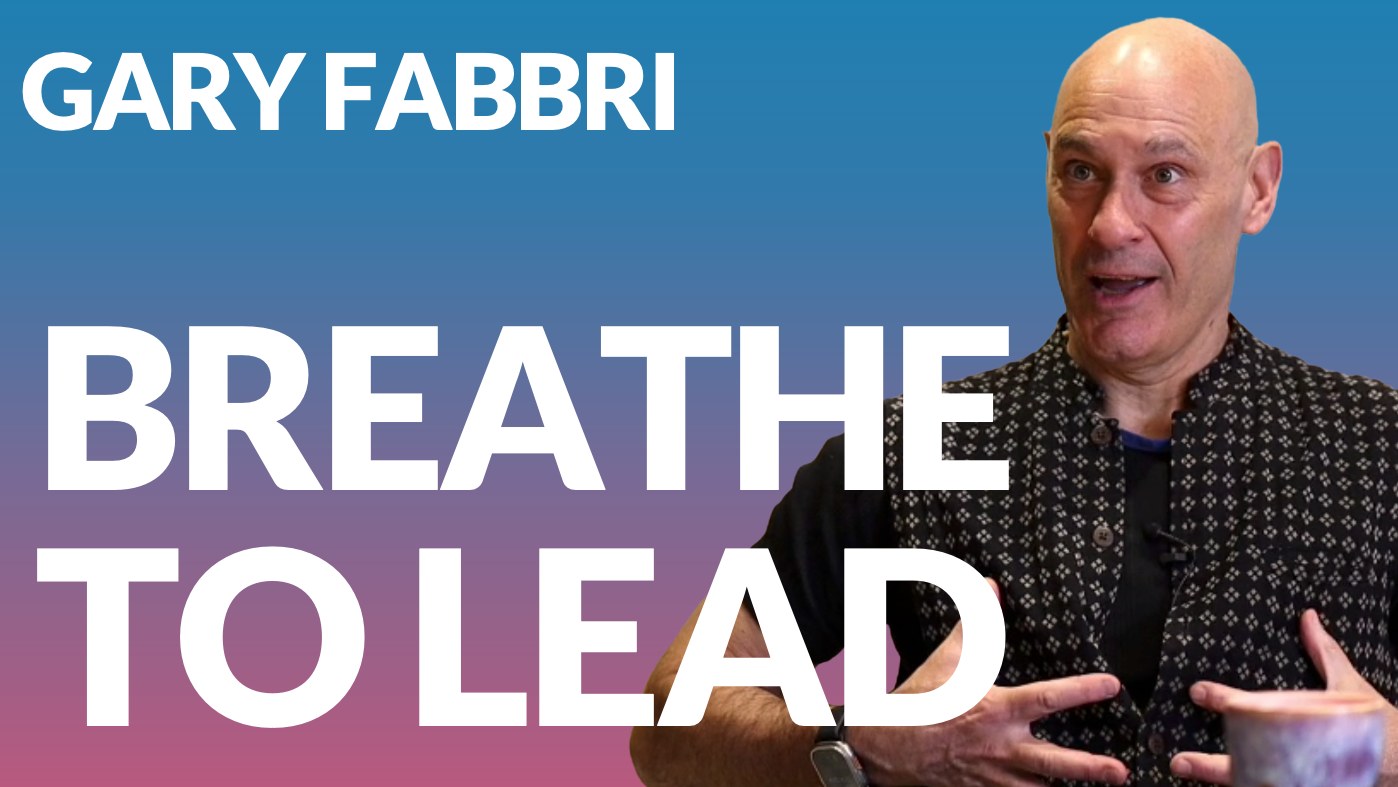
In this episode, we sit down with Gary Fabbri, Writer, Artist, Speakermy and also my breathwork instructor - to explore how inner work shapes outer leadership. With roots in psychology, literature, and business, Gary bridges the strategic with the spiritual, helping leaders find clarity in chaos.
This is a conversation about breath, strategy, authenticity and what it means to lead in alignment with who you really are.
🔥 Insights from the episode
1. Breathwork as strategic clarityGary breaks down how conscious breathing shifts us from reactive to intentional. It’s not just about relaxing - it's about realigning with what matters, especially in high-stakes leadership moments.
2. Self-awareness is a tool for prioritizationIn a world where leaders face constant noise, Gary argues that executional excellence starts with knowing your own values. The better you know yourself, the better you prioritize and the more focused your actions become.
3. The masculinity trap: performance vs presenceWe explore how traditional ideas of masculinity - achievement, control, suppression - can block leaders from vulnerability, reflection, and growth. Gary offers a new model of strength: grounded, open, and connected.
4. Authenticity is not a personal brand—it’s a daily practiceGary challenges the idea that being “authentic” is about optics. Instead, it’s about doing the deeper work to know who you are—and leading from that place, consistently.
5. Micro-practices help—but deep work transformsWhile 4-minute mindfulness has its place, we explore how the long-format work can create the real shift. Just like strategy, true change needs depth and space.
🎧 Listen for tools and perspectives that can help you lead with more clarity, presence, and intentionality—in work and in life.
Read the full transcript
Gary Fabbri Breath. I've been speaking about my breath work practice on multiple podcasts already, so I thought it'd be a great idea to have my breath work coach on. His name is Gary Fabry and Breath work to me is one of those practices that's super effective in terms of getting me into my conscious status quickly as possible, getting me into contact with my emotions and centering me for the coming week. So if you haven't tried it, I encourage you to listen to this episode and decide yourself. Enjoy. ? [00:00:36] Johan: Gary, welcome. [00:00:37] Gary: Thank you. [00:00:37] Johan: You are my breath work coach. [00:00:39] Gary: What is breath work and, and how does that kind of, um, make an impact into a leader's life, do you think? You know. There's one bodily activity that we have control over, and that's our breath. I mean, maybe some like super yogi or something can control their heartbeat directly or something, but most of us can't control any of those kind of internal functions. But the breath, we can. Yeah. And when we control the breath, we work with our nervous system. Um, and so by working with the breath, we increase the amount of oxygen in our body. We work with the nervous system, and we can alter how we feel through breathing. Um, we know this from the relaxation side with activities like, uh, box breathing that the Navy Seals are doing and all these kind of like, um, very, uh, let's say, um, people who are in stressful situations are practicing, but then also on the other side where we wanna cre increase energy or we wanna have deep, uh, connection or relaxation. So the breath is right at the center of that. Mm. And on top of that, if you think of it physiologically, you're taking the breath in the whole world that's around you, into your body, right to the center of your being right in right here, right? Mm. And then you're breathing out again. So you actually are taking the world around you in a way also that you don't do with anything else. There's nothing else that's so intimate as the breadth in terms of how you interact with the world around you. [00:02:02] Johan: Yeah, absolutely. And I think it's really interesting as well, how. Kind of the, the western world of science is coming to approaching more and more the more Eastern spiritual world. And I think breathwork is one of those things that's really kinda made it big into like, there's, there's actual like western science around that as well. What does that say? The science of it? [00:02:25] Gary: I think, um, the science itself is saying that basically, yeah, you can alter your, um, the amount of oxygen. Of course, that's a very obvious thing. Um, but then also the way that you work with your, um, uh, nervous system mm-hmm. Is affected a lot. And so the science is actually backing up the idea that, yeah, you can calm yourself by taking a nice, long, slow, deep breath. Mm-hmm. That's beautiful, right? Mm-hmm. Or you can also activate yourself by doing these kind of, you know, rapid paced things. So the science is backing up the activity. Um, yeah, I think that's, and first of all, like. [00:03:04] Johan: Breathwork is kind of a broad subject and can, can kind of categorize the different parts of breathwork. [00:03:11] Gary: Yeah, sure. So, um, if you think about like, um, breathing itself, you know, you have like the Vim Hof kind of group, then you have the yogic pranayama, then you have this holotropic breathwork that was brought in from people like stanis, gra and the early, you know, turn of the century kind of thing, where they were working with how do we create experiences through the breath. Mm-hmm. So there are these different areas and all these areas are, are basically intertwined. Okay. Right. Um, there's only th Yeah. Three things we can do with our breath or four things, if you wanna think of it like that. We can breathe in. Inhale. Yeah, we can hold on the inhale. We can breathe out. We can hold with no breath. Mm. Ultimately, that's it, right? And then it's different durations, different speeds and all that kind of stuff. So it's a very simple and ancient technology that's been developed and thought through over time. But ultimately that's all we're doing, right? Yeah. So then it's how do we work with that? And how do we work with how we feel? What kind of intentions do we set as we go into it? So like if you look at, for instance, the Vim Hof stuff, right? He's like, you know, you could be a more powerful individual. Yeah. You can go in the ice bath. So it's like breathe 30 breaths and you could do more pushups. Yeah. Because you're. It you just getting your energy up. Mm-hmm. The oxygen is increasing in your body and then you have a little bit more capacity to continue to perform. But his [00:04:28] Johan: formats are a little bit shorter as well, right? [00:04:30] Gary: Exactly. Yeah. Yeah. So often there are these like 30 breaths and then do some activity, like hop in the water or whatever it might be. And then also then maybe calm your breath when you're in the water. So it's like big, deep breaths and it helps you to deal with the stress that's coming from the coldness. Right. Um, [00:04:47] Johan: and then on the opposite end, you have the longer formats. And how, how long are they [00:04:50] Gary: So a holotropic breathwork session could be around an hour or even two hours long. And that's where you're breathing just consistently in a way like. Through the mouth usually to increase the amount of, um, oxygen exchange. Mm. Um, typically when we're working with breathing as a, let's say a function, we wanna breathe through the nose as much as possible. And there are all kinds of scientific things. There's this guy called James Nester who's written this book recently called Breathe, and he does some, he talks, he's a journalist and he talks to different, uh, uh, breath work experts about, oh, you know what's best physiologically. And we know that breathing through the nose has physiological benefits. So in general, if you're gonna like. Walk around breathing, just breathing through the nose even when it becomes a little intense is quite good for us. And there are, you know, people, athletes right now who are working with that as well as they're training. So they're trying to increase their breathing through the nose, nose breathing, and elongate the breath while they're performing. [00:05:48] Johan: Yeah, I've heard about like the taping of the mouths overnight as well. [00:05:52] Gary: Yeah. That also helps with snoring. Right? Oh, okay. I've heard about it from, [00:05:56] Johan: from more the, the kind of athlete's perspective and Yeah. And power lifters and so forth. Yeah. That helps. [00:06:02] Gary: Yeah. Yeah. They're saying that that helps because you're, you know, you're, you're working with the breath in a, in a better way. It's the best way to breathe for your physiology. Yeah. [00:06:10] Johan: Yeah. [00:06:11] Gary: Gotcha. [00:06:11] Johan: So I've found you in the, in the kinda longer format stuff. Yeah. To me, usually I, I go on Sunday evenings. Yeah. To me it's an awesome, like, reset for the week or almost you talked about. Setting an intention going into the breathwork. For me, it's almost like setting the intention going into the week. Hmm. So I find it very difficult typically to, to kind of find those longer moments of reflection. Uh, and it's kind of interesting because I'm not really actively reflecting that much during the breathwork session. Yeah. It's kind of interesting. You have something to do compared to normal meditation. I think we just talked about it before the show, that when you're just meditating, it's so easy to kind of get wrapped up in your own head and start thinking, and the, the mind is starting to wander, but during breath work, it's like you're always kind of focusing on something. Mm. But that also unlocks some kind of unconscious level of, of thinking that's very valuable to me. Hmm. Is that the reason most people come, do you think to the longer stuff? Or is it individual? [00:07:13] Gary: I think that people are really affected emotionally. Yeah. Yeah. And so yeah, there's a kind of, um, like a long form meditative, uh, activity that come that you know, that you're working with. Hmm. And you can, you know, you, you can think like that and then maybe you don't have a specific idea, but you know that some things can come, come up during the session. Mm. But most of it is, you know, they say that we, um, you know, every molecule in our body has a kind of memory. Right. And it's like all intertwined. And when we get into the breath, and especially when we elongate the breath and have a long session, we give ourselves time to both like land. Mm. Um, so, and step away from thoughts because we're breathing constantly focusing on that breath. Mm. But then also activate the emotional body so things start to come out. They really do. Yeah. Do you know the reason why they do. I don't really know the reason other than that I know that we're working with, um, igniting the, the, um, nervous system. Yeah. And then the nervous system, of course is talking and triggering to the brain, right? Mm-hmm. And so then the brain is then activated through the, through the breast. So in a sense that's, that's it. Yeah. But I don't know if there's any other kind of, you know, function that's happening. Um, [00:08:29] Johan: because it's interesting in, in the room usually we're around, I dunno, 15, 20, 25 people. Yeah. There are really moments of people being very, very emotional. Mm-hmm. But at least to me, that like you, you, you're so much in your own bubble that it's kind of out, doesn't. At least face me. And sometimes it can kind of be useful as well. Mm. Like having other people going through stuff. When, when you're kind of stuck in, in something where you're, when you're in your head Mm. Just hearing like, because emotions is one of those things that we don't really allow, especially like this audience is so much leadership, audience, like emotions is almost something that you're, you're taught not to display. And what's interesting with you, by the way, it's not you're, you're not just a, a kind of spiritual sheer, you started your career in, in, in the kind of commercial world. [00:09:25] Gary: Exactly. Yeah. [00:09:26] Johan: Tell us a little bit about your kind of road and, and how come you found. Breathwork and, and this whole alternative universe. [00:09:33] Gary: Yeah. So, um, I've been in like the, the TV and media industry for a long time. I was a creative director, um, in London. I worked first for NBC and CNBC. Um, and then I went on to work for Fox Kids in Disney and did a lot of branding and that kind of thing. Mm-hmm. And then I moved to Sweden, um, quite a few years ago and I, um, I worked for an agency as a creative director and yeah, making films and all kind of stuff like that. And, um. At some point during those years when I guess my, my children were small, I started to sort of think a lot about like, well, am I, you know, in touch with who I am. And I, I've always been had a little interest in like, like let's say poetry and, uh, spirituality in some way. I kind of studied religion at one point. I thought I would be a priest when I was like, you know, 17 years old, that kind of stuff. [00:10:24] Johan: You come from a spiritual home? [00:10:25] Gary: Not really. Maybe, you know, I was raised, uh, in the US Yeah. And there was like, you know, we're gonna go to church every Sunday. Yeah. I don't know if you'd call it spiritual. Yeah. It was more like community. Mm-hmm. You know, so, and we also get a lot of benefits in terms of like going to like, uh, you know, retreat things when we're kids and stuff. The church would kind of organize. So, okay. Yeah. So that was a kind of a good thing, um, in that sense. Um, but then when I sort of discovered especially breath work, I was like, ah, this helps me to come deeper, to connect more. Yeah. And then to align more with what I want to do, because I think I felt like professionally. I was offering a lot in terms of like for clients and stuff like that, but I didn't feel like I was kind of sharing the whole of myself. Right. And I thought, how can I work a little bit more with who I am to then share more of what I feel or see in the world? Yeah. And so that's why I started to do like, you know, teach breath work. Mm. Um, to work with like leadership teams and people that wanna come a little bit deeper and make more of a more alignment with who they are. Mm. So when they behave, there's like less stress, more excitement, more engagement, because you're more aligned with your own internal values. Yeah, [00:11:38] Johan: absolutely. Yeah. It's almost like the clarity part of it as well. Hmm. That to me is probably at the epicenter of, of what I'm kind of getting out of breath work. Hmm. Like you're stepping away from, from that kinda stressful mask, wearing sometimes life and then getting into the emotional, emotional state, but then utilizing that to become. To become more thoughtful, authentic, bringing more of myself. I think I'm on the kind of same journey. Mm. So what happened then in your life? So you had that spark, did you go like balls deep into breath work all of a sudden? Or, or kind of, yeah, like, [00:12:14] Gary: so I thought, okay, so I had like kind of a few, like, maybe it was like a crisis time. I was like, the kids were small. I was kind of breaking up with my, the boy's mom at that time. And I was like, I need something, you know? And then I was working as a creative director, so I was like, all this stuff is all happening at the same time. And I'm like, oh, you know, I need something. I need something. And then I started having these like, you know, visions or my, you know, dreams or whatever. And um, and then I thought. Where do I go? You know? Yeah. Um, you know, the old Christian Catholic church wasn't really the place. Mm. Um, you know, uh, I, I did like jiujitsu and, you know, martial arts and all that kind of stuff, but that's a, the, a lot of the, let's say the spiritual side that you get and like karate kid, that's not really present. It's more like just like boom, you know, crushing each other, which is fun, but it's not, wasn't where I need, need what I needed. And then I thought, oh, yoga. So I went into a, a yoga studio and I just decided that I'm gonna like see what's there and it's so all of a sudden, you know, you're challenged because you have to relax. Yeah. You know, you have to do this restorative stuff and all this kind of yin thing where you just like lying there being look. Like looking after yourself, but also other people looking after you. Yeah. And I was like, I hate this, but I need it. And then I found breath work in that context. Um, you know, and then started going deeper, deeper over, you know, 10, 15 years. And then I thought, oh, I could, I could, you know, help other people with this. So then I started teaching it. [00:13:44] Johan: How much of that is your world now? Because you do other stuff as well besides breath work? [00:13:49] Gary: Yeah, so breath work is only, you know, I only teach that really one, two days a week. I have a breath work class that you, some you come to quite often. Yeah. That's Sunday night thing. And then I have a one class on Mondays, um, in general. Um, and then if I do corporate work, sometimes I, I almost always incorporate some kind of breathing. Usually not a whole breath work session mm-hmm. But some kind of breathing to align and to connect and then move ahead with whatever it is that we're gonna work with that day. [00:14:18] Johan: I think one of the things that I've had a discussion on previously on the podcast is that we, we all have a tendency to, to produce really bad meetings. And I think part of that perhaps could be like, if, if you were really intentional and perhaps did some, some lighter form of breath work at the start of a meeting, you could probably improve the outcomes of the meeting quite a lot. Getting that reflective state in. [00:14:39] Gary: Yeah, definitely. What happens is when we start to breathe in just a conscious way, elongate the breath and slow down the breathing, slow down the voice. I mean, we automatically start to step away from that fight or flight mechanism and into this kind of, they call it liminal brain. Right. Okay. And that is more of a communicative space. Um, and then even if we go deeper into the kind of neocortex in that kind of area, and those are, there are studies that show this, like, as you breathe and meditate, your brain is ignited more. [00:15:14] Johan: And how would you recommend, so say that I run 20 meetings a week. Mm-hmm. How would you recommend using Breath Consciously to improve the quality of the meetings that I have? [00:15:26] Gary: Yeah. So, um, I developed a series of these meditations, I call 'em Meaningful Success Meditations. Right. Okay. And it's really simple process. And I can tell you right now what it is. It's regulate. Reflect and respond, regulate, reflect, and respond, and regulation is simply this. So we could even do a short, short, short one now without, no, that's good. Boring people. Good. Okay. All we'll do is we'll just, just notice the breath, breathe in and out. And as you breathe in, we're not gonna meditate on the breath. We're not gonna spend a long time. Just, just notice how it feels to breathe in and out. And now as if it's the most natural thing in the world, just elongate and deep in the breath, just by 10 or 15%. So just a little bit deeper and a little bit longer, a little bit deeper, and a little bit longer. And what happens when we deepen and lengthen the breath? We're using the technology, the ancient technology of the breath, to tell the body that everything's fine. And the body talks to the mind. The mind says everything's fine. And the second part of this whole process is reflection. So that was regulation. Just deepening and lengthening reflection is how can we connect in the most possible positive way during our session today, reflection, it could be any reflection point. How can we create a fantastic strategy over the next two hours? How can we contribute as being our best selves? How can we, you know, whatever it might be. That's the topic of that particular session. So we're focusing, and then the third part, sorry, the third part is responding. When we're done with that little bit of reflection, let's respond. I had an idea during that, uh, those, that one and a half minute of, of, uh, reflection, this is what I'd like to share, or let's start the meeting, whatever it might be. Mm. And then with that refocusing, we're actually using the physi physiology of breathing to help us to align. [00:17:52] Johan: I think that makes a ton of sense. Yeah. It's weird that we're all, we're all kind of in this bubble where it feels like it's kind of a, you, you, you're sticking out of the crowd starting a meeting like that. It feels a little bit forced or something, but I, I do think it would provide tremendous value, especially in the meetings where you're actually dealing with something difficult. Yeah. Like finding that reflective atmosphere in a sense. [00:18:21] Gary: Yeah. There are plenty of techniques that don't involve, like, let's say something is kind of flu or whatever. It's breathing. Yeah. So for instance, you could do something called, we call it like. Release tension, set intention. Okay, so let's say that we're coming into a meeting, you know, maybe it's only appropriate if there's like people that you know, right? But you'd say, okay, you know, I, I, I, um, I just had a, a, an argument with one of my kids. He's annoying me. Can I just release some tension so we can set our intention to have a good meeting today? And you'd be like, yeah, sure. Of course he would, right? Mm. And I say, you know, the guy just pisses me off. He doesn't do what I want. He doesn't help out around the house. Oh, right. And you're like, all right, now we can go. Yeah. And just those kinds of like, activities that help us to align with who we are and get rid of the crap that we don't want to take into the meeting can help us. Yeah. So there's probably, you know, like a, a little box of tools that we can use just for these things. [00:19:20] Johan: We're all kind of ashamed of the emotions that we carry into meetings or whatever, meeting. It doesn't even have to be a professional meeting. Hmm. Like I, I find myself so many times still carrying stuff from the last meeting into the new meeting. Hmm. And not being conscious. About like, kind of switching the context. Mm. And I would really like to experiment with being more deliberate in, in kind of giving myself at least two minutes of, of doing, because it's quite quick what we did now that, that was like a minute. Yeah. And it's really impactful. And I do think probably people, uh, listening to it probably followed it along as well. Mm-hmm. Like you could really feel the difference in such a short amount of time. Do you do this, like, is is it just natural instinctual for you by this point to, to really use your breath to kind of regulate emotions or? [00:20:09] Gary: Definitely whenever I feel like, oh, I feel a stress, I make an active choice. And I think I've learned and taught myself to do that, so I'll just be like, and you just feel the tingling, you know, the goosebumps come and you're just like, oh, here I am, I'm back. Yeah. Do [00:20:29] Johan: you have a, do you have a practice that you could do one of the. Things that happens to me. And I guess a lot of people, when you have these kind of meeting days where it's just back to back to back, you have it, I find it difficult to focus after a while. Hmm. Do you have something that's more like focus, intention setting that you could do with the breath? [00:20:46] Gary: Yeah, so there are a lot of things that, um, you know, people like Tony Robbins are always kind, you know, espousing these kind of things. But you can do like a little shakeout, um, where you just like, you're breathing, you know, this kind of like, that kind of, you know, rapid fire breath and shaking your body. 'cause uh, there's, you know, the animals in the wild release trauma from the body when they shake, right? Yeah. Yeah. So if you're just shake out yourself and do big breaths like that, all of a sudden you'd be, you'd be so surprised at what an effect that can have. And it takes 25 seconds, 30 seconds as you probably, yeah. Maybe you know it, but I run these like ultra marathons sometimes. Right, okay. And I go kind of slow and everything. But when you feel like you just, like, everything is just like. Because, you know, you run it for like maybe a hundred kilometers or something. Mm-hmm. Everything is just like coming in on you. Right. And if you just give yourself this kind of like, oh, shake out breath thing, all of a sudden you have like renewed energy. Yeah. So physiologically a hundred percent works. You can go in the bathroom and do it. Yeah. And then you between sessions and you're just like, okay, I'm ready. Yeah. You know, those things definitely work and there's nothing wrong or embarrassing about doing it, you know? Yeah. Obviously, you know, if you're leading a whole group and people are walking by, it's different than if you just do it yourself to get yourself going. Yeah, [00:22:01] Johan: absolutely. That's so great advice. Yeah. I, I'm gonna take that with me to, to the week. 'cause to me, breath work has been kind of the sacred zone, not Sundays setting a broader intention for life, but, but you can be so much more micro conscious about it. [00:22:16] Gary: Yeah. You know. The breath. One of the things that I'm trying to work on now and communicate a lot is this idea of, you know, alignment with who we are and what we wanna do. Mm. Um, because there's so many things that you could do. Yeah. Right? Absolutely. You get up early. We, we talked about that in the beginning, before we started. Right. You get up at 5:00 AM and then you got all this kind of, you know, you're doing your pushups and your gratitude journal Yeah. And your yoga pass, and then you are, you know, whatever. And then finally you're making breakfast for kids and then you're out the door and this kind of stuff. Um, and like, how do we know what to put in place? What Yeah. It's super difficult. Yeah. You know, we just could follow somebody else's like list. And we love that. Like someone says, do this, do that. Mm-hmm. Take these supplements, you know? Yeah. It's like, like, you know, Huberman or whoever or Ritual saying all this kind stuff. And then the question is, well, what from this big list do we need? Mm. You know, and I think the, just letting ourselves focus on who we are and what we need and want. Is the most important thing. And if you think of mindfulness, nothing is more like of a micro habit than being mindful. Hmm. Just being really here, present right now at this moment. And we do that through letting ourselves just see, yeah. You know, [00:23:32] Johan: what is mindfulness for the people who've never tried it? [00:23:37] Gary: Mindfulness is being as present as possible with whatever we're doing. I mean, it's that simple. And so. When you come into a meeting after another meeting and you know, maybe it was a tough talk or whatever, and then all of a sudden you're sitting here with me and if you're sitting there thinking about whatever it was just before, we're not really fully present. Yeah. Um, and many of us who are very active, you know, we suffer from this 'cause there's loads of things that are carrying over. Mm. Um, and that's okay. There's nothing like wrong with that. The thing is, is we know from experience that those times when we're really as, uh, present as possible, better things happen. Yeah. Right. And so we wanna find techniques or whatever that can help us to do that. [00:24:24] Johan: One of the things that I struggle with, with mindfulness, I used to use Headspace. Mm-hmm. The app. I think it was really good, especially the founder has a fantastic voice. Uh, welcome back. Yeah. I'm Andy. I'm Andy. Yeah. Yeah. A fantastic voice. But it's, it's almost like putting a, a, um. Just like, it just treats the surface level symptom in a way. Hmm. And I think what's really interesting with breathwork is how kind of deep you can get quickly. Uh, but I do think that mindfulness is very useful, especially dealing with like short term stress. Yeah. But what you're talking about now, which I find it's really interesting, is the idea of being mindfully present. Yeah. I, I think I've been thinking about it more as a kind of stress management tool to just. Almost like self care a bit. Mm. But not necessarily with the intent of being like hyper present in the moment. Because obviously I completely agree with you, like everything's better when you're there. Mm. But I, I really struggle with that concept, especially like with a pace of, of life, you know? [00:25:30] Gary: Yeah. A lot of people make you think that, oh, like, um, you know, you walking along the road like some monk or something and you know, and it's not really, I mean, it's not meant to be like that. The pictures that we have are, are like that. Um, but it's not like that. It's more, more like someone that be enters into the flow state. Yeah. Right. That's really engaged in whatever they're doing. I like to think that, you know, like when you have a workshop, right? Everyone is like on their best behavior. They're on, they're in there. Yeah. They're playing with their post-its in there, whatever, drawing pictures, whatever they're doing there, right? And you're like, why can't. Our whole like business lives be like we're in a workshop because we're more of ourselves, we're more present, we're more engaged. Yeah. Um, and we should be like that all the time. And if we need a little bit of time to refocus so we can go in like that, then [00:26:24] Johan: there's so many concepts like are kind of connecting to this as well. I think one of the things in workshops that we don't really think about it. Is that it's actually very playful in nature within, in a workshop, but we're so kind of serious in all of the other facets of, of especially the professional life. I don't think we think consciously about the value of play play because play what's interesting in, in, when kids are playing, they're, they're kind of collectively responsible for carrying the play through in a sense, but it's, it's in a very playful nature and not like that deadly serious all of the time. Yeah. So I think there's so much you could, like, you could refocus in, in your kind of work environment to make it a a lot more enjoyable, uh, but also more productive. But how do you know, like coming back to it, how do you know what things that you should kind of fit into your schedule that that carries value versus the things that is just end up, ends up becoming one more thing on the to do list that is. Like the mind getting mindfulness in can be a stressor in itself. [00:27:27] Gary: It's interesting 'cause at the core, so I think exactly, exactly that. Let's say we take away, we looked at all this stuff that we're gonna do, right? Yeah. And we just take away all the protocols. We don't think about getting up at five and all that kind stuff. Yeah. All the habits, right? Yeah. All the habits just go and we just are, we be, we just breathe. We listen to ourselves, notice how we feel, and then we start to put things in place when things are more, when we feel more aligned with ourselves, maybe we do it in a playful way with someone else who we kind of like, let's say respect or know that can offer something. And then you start to say, oh yeah, well what if you know? I don't know. Uh, let's say it's doing pushups, uh, in the morning or something, you know, let's say we're gonna do that. Okay, well, how do we make that playful? Yeah. How do we make that interesting? You know, what things do we need to do? Um, I don't like to write my journal every day. I wanna do a voice, whatever, you know? And if they come from a place of alignment, they're gonna be more, they're gonna be better. [00:28:31] Johan: I used to find, like when I think about like the process. I usually do a lot of that in like two extremes. Either when I'm in very high levels of alignment, I've just come back from some retreat or something like that. Or I do it from a, a perspective where completely everything is falling around me and I need drastic change. I, I don't think that much about my process when everything is, is kind of okay. Mm. But it's probably from that point that you should, like, refocus more often, like make smaller, iterative changes from a place of reflection. [00:29:07] Gary: I think that it's all the time. Yeah. Right. Yeah. It would be nice to like, obviously like there's a, when, when we're in, let's say panic mode, right? Um, it's, it may be hard to think about things. Yeah. But actually, strangely, most of us who are especially like, let's say high performing people would be interested in your podcast or whatever. Um. You know, they're good in stress, right? Because they're dealing with everything directly, right? Yeah. Yeah. And that is a point of mindfulness. That is a point of like real concentration. The bus is coming towards you. Yeah. Right. And you are just ready to deal. Yeah. Right. At that moment you're like at your best because you're most focused. It's when all these other admin things and whatever it might be that comes into life and all that kind of thing, that's when it becomes like, oh yeah. Right. So we like the stress because the stress of course, raises our dopamine levels, gets us kind of even in that sense. But it also, um. Makes us more acutely aware of what's happening. Yeah. More aliveness in a sense, more presence. Yeah. And so if we can find that presence even in the more mundane things. Yeah. You know, there's a saying like, you know, uh, before Enlightenment wa uh, fetch water and chop wood, and after enlightenment fetch water chop mm-hmm. It's like the, it's like the everyday things can also be filled with a kind of beauty. Yeah. You know? Um, and it doesn't always have to be stress related focus. It could be just being focused and both are equally, let's say, mindful. Hmm. Yeah. [00:30:43] Johan: It's a big part of, of being mindful, doing one thing at a time. [00:30:48] Gary: So this idea of multitasking is different from being present. Yeah. So like I. I think you could be a multitasker because they say that you're really only doing one thing at a time anyway, you know, in a sense, but you're just doing micro doses of that. Yeah. Um, and I think if you're very mindful of what you're doing, even if it's only in small chunks Mm. Uh, it could, it could happen. It might be very hard because you're constantly switching. Yeah. Right. Um, and the, and the out the external, um, impulses are kind of, uh, coming at you all the time. Can we talk about like, context [00:31:30] Johan: switching for a while? Because that's one of the new things in my life that's been, I'm, I'm really trying to figure it out. So this actually comes from like ai. Mm-hmm. So I'm, I'm, I'm really deep into ai. Mm. Um, and what I find right now happening is that something that would take me say four hours. Like my, my, I, I really like deep focus, so I, I, I have always tried to kind of arrange my schedule in a way that I do like bigger blocks of focus work. Something that used to take me four hours now takes me between half an hour and an hour. Hmm. That means that I context switch so much more in a day now day. I do like deep work because I can go deep really quickly with ai, but then I have to focus switch between multiple deep things and that to me is becoming a real stressor, or not stressor, but I, I find myself way more exhausted at the end of the day. Hmm. Because I'm not in two buckets. I mean 12, 15 buckets doing kind of deep cognitive work. Do you have a way to deal with context switching? [00:32:34] Gary: Yeah. Um. I think I'm, I'm a little bit like you in that I can go into one area, then the next, and then I, I hear what you're saying with AI too, because a lot of, like, the process of thinking our way in, um, is, uh, is shortened. Yeah. Because the AI knows exactly what you're thinking. 'cause it's already has these kind of processes in place Yeah. Um, that are sitting behind it. And, uh, I think that spontaneously we, we need to think less about being, let's say, productive in that sense. Yeah. Um, and more about like. What really is important. Yeah. And then what we really wanna communicate, um, and remember that we are at least right, still biological creatures that need to, um, have this kind of cycle of, uh, let's say activity and rest. Yeah. Right. AI doesn't need any rest. It's silicon-based, uh, te intelligence, right? Yeah. And so what happens is we're it's gonna use us up rather than we using it. Yeah, exactly. And so we, we wanna switch the paradigm back to our intention, what we really want. 'cause it's, it, it will go forever. It will never tire. Right. As long as there's electricity. Yeah. Yeah. As long as you're working to put electricity into it, um, basically it will keep going. So what we need to do is think Okay. I get this far with the ai and then I, I want to think, okay, well what do I really want to communicate now? Yeah. What's really coming from me instead of what's coming from the external genius of the ai? Yeah. And I, I [00:34:17] Johan: do think there's a lot of processes that we're still trying to figure out. It's like we have this new foundational technology and it's like it's the first time we have fire available, and then you try to put fire on everything. And they're like, yeah, fire is awesome in, in certain spaces, but you need serial fire in, in other spaces. Mm. And I've kind of approached AI specifically from, from the point of view of productivity, as you say. Uh, but then, then you go on this endless. Like road of being just more productive, producing more and more and more and more. And I think there's so many things in like really to figure out, like in, in a broader scheme of things like for society. Like how do we as leaders for example, rig our teams. We get all of the benefits from AI and supercharging our teams and our organizations with ai, but, but making the experience fundamentally more human. Mm-hmm. And [00:35:11] Gary: I think we should really be thinking about how we really feel. You know, I think we lose sight of that in terms of when we're trying to like create, uh, be super productive. And I think that, you know, if you're miserable then it's not working. You know, whatever, whatever it is. If, if, if you're miserable, then it's a sign to you that something's not correct. Like something, but it's interesting 'cause [00:35:36] Johan: you're, you're miserable in, in one sentence, but you're also in that awesome flow state. Zone where you're like, 'cause I loved great. Yeah. Like that's one of the, the core things in my life. Yeah. That's so interesting in it. So like, nobody's forcing me down the road of, of ai, I kind of voluntarily like, wow. Wonder what happens if we do X, Y, and Z. And like, I, I just sit for hours and, and like experiment with it. Mm. And that's voluntary. But I do think that we need to think again, as you said, way more consciously about this kind of cycle of, of like intense productivity and rests. And I think I haven't thought about the rest part enough because I've been so kind of intellectually interested in, in kind of the output side of things. Yeah. And it never tires, you know? Yeah. [00:36:21] Gary: Never. It doesn't need that cycle. It's a, well maybe it's, there's a different cycle that we don't know yet. Yeah, right. With ai. But we have a cycle. You know, [00:36:28] Johan: what's our cycle? [00:36:30] Gary: Well, I mean, we have to sleep. Yeah. We need sleep. Uh, it's not an option. You know, if people don't sleep then they die. So we know that we breathe. Air in and out. We talked about the breath a lot. That's part of a whole cycle of living. Mm. Um, we are aging, you know, uh, we have children that are growing. All these kind of things are, we are affected by the season. Yeah. You know, um, ai of course it's still in its infancy, you know, um, but it won't need those things. It will need different things, especially if it develops like super intelligence to the point of, you know, a GI or whatever. Right. So like that's happening. Um, and that's going to, if it's gonna be, uh, healthfully in parallel to us, then we need to find some biological, um, uh, ways to feel well, you know, because we, we could easily get wrapped up into this kind of frenzy, which is not normal, like you said, you know, you try to put the fire on everything, right? Yeah. Um, in the beginning, yeah. We're, we're all chaotic and trying everything that we can possibly do, and we wanna. Let's say for ourselves and our families collect as much money from the ai, you know, from using these tools and all this kind of stuff and create, create security and safety. Yeah. At some point maybe that will all just totally shift. I think we're obviously, and you know, as well as I do, maybe even more that we're in a super paradigm shift. Yeah. If this thing goes the way it could go, who knows where our, let's say work lives and all that kind of stuff will end up Yeah. You know, um, so I think just be aware. We have to be aware of our biology and be respectful of that and then, and really, you know, honor what it is that we want and how we feel. [00:38:19] Johan: Yeah. Um, I think there's so much that is interesting in the whole. Like, uh, if you, if you make a big group of the world of, of like spiritualism and yoga and, and all of this kind of what we feel are the kind of alternate worlds. Mm. Uh, or at least we feel in, in kind of some type of mainstream society. Like there's so much value in, in the kind of reflecting on the things that you wouldn't normally do. Mm-hmm. Because everything has to be kind of rational and, and you only focus on the productivity side of things. Mm-hmm. But that conscious experience of like, what do I actually want? Mm. When you meet people, 'cause you're in the, you're connected to the yoga studio and blah, blah, blah and and stuff like that. What do you feel is the biggest mindset shift that people go through when they start exploring this side of themselves and what are the. [00:39:12] Gary: So I think what happens is there's a general dissatisfaction. Mm-hmm. Um, we recognize that the life that we kind of thought the dream of whatever it might be, is not exactly the way that we're living. Yeah. Um, and then we see that there are other alternatives out there. Um, and we start to pursue them, uh, in different ways. A lot of people who start these kind of journeys, they immediately like, let's say, break up with their partner or they've broken up and they're trying to find a new, you know, context. Um, maybe the, you know, we could almost call it transition times. There's like transitions that we go through. And in the transitions, that's where this kind of stuff becomes bigger because we feel bad and we wanna feel good. Mm. When we feel good, like you were saying about the practices, we tend to like, let it, let it go for a while, you know? Um, and then eventually we feel bad and then we go back and try to do something else to fix it. Um, so I think it's those times that when this kind of stuff comes in, you know, people say like a lot of times, oh yeah, we don't like the church except for when we die, right? Mm-hmm. And then people go to church and they have the funeral and all this kind of stuff. It's not a thought you wanna think about all the time, but it's when we lean on, you know, these, these things. And I think that if we. Let's say find our spiritual connection, which is really a representation of just connecting to ourselves and especially connecting to other people, like creating this kind of like community of connection with people. Then I think that if we can maintain that, we'll probably be, be happier and better off through time. You know, [00:40:53] Johan: I think that's really clear. I haven't visited all of the yoga studios obviously, but uh, at Urban where, where you teach, it's very rare to as soon as you enter that place, like it's clear that it's community and people care about each other. Like you're, at least to me, there's very few spaces that are like that. We're we're very unused to the idea of a community. And you mentioned before, and I think it's so interesting, very few places are you cared for, especially in leadership positions. You're, you're so used to, to kind of. Trying to care for somebody else, but like, who cares for you in a sense? And not even you do perhaps. Hmm. Uh, so that's super valuable as well. I know you taught my, um, my wife went through, through the yoga training or yoga teacher course with you guys. What's the kind of spiritual side of, of that education? Because I, I thought it'd be way more like this is the position, but whenever she came home, it, it was mostly like the philosophy of it that she was really interested in. What do you bring them through? [00:41:58] Gary: Yeah. So I, I teach the philosophy and the breathing side is called pranayama in the yogic thing. And then the, the spiritual side in the, uh, philosophy, yoga, philosophy. Hmm. Um, and it starts with this simple phrase. It's one of the, it's called, it's, it's, you're, it. Hmm. You're it. Yeah. Like a game of tag, like a game. Right. You're it. And the whole premise is if you know that you're it, and by it, it is like. Consciousness itself that you, your consciousness is the consciousness. Okay? As soon as you know that, then you're, let's say, enlightened. And the problem is, is that we know it, but we don't know it. So if I say to you, you're it, and you're like, I feel like I'm it, but maybe what about, uh, and then you start asking questions and it's answering those questions that we sort of go on this internal journey. [00:42:52] Johan: So what are the questions? For example, [00:42:54] Gary: the question is like, um, um, you know, yeah, I feel like crap. How can I be it? Or my mind is filled with this clutter, you know, and all this kind of negative thought talk and all this stuff. How can I be, how can I be it? Um, and then it's like, okay, well how do we, if I said to you, you are it a hundred percent and you knew it, right, but you don't know it. Yeah. Then how do you experience it? So then the practices, maybe whether they're breath work or meditation or listening to sound healing or whatever, they're all trying to get us the experience for that moment. In the yoga world, we call it samati, this, uh, nirvana like state, right? Um, where you're just like, whoa, I'm it. And some of us have experienced that, you know, if we've been involved in, you know, anything from psychedelics to, you know, meditation or even if we're playing basketball or something, it's just like, whoa, everything's perfect. Mm, right at that moment you kind of know it and then you know, you get onto your problem life, whatever. So in the yogic thing that, that I teach, it's all about that idea that you're it. Now, another thing that I could say about that, um. Most of our learning in the west is additive. So two plus two is four, four plus two is six. You know, and, and know on, right? Mm. And so on. We learn mathematics and the, and literature and language. We construct sentences ly. Yeah. And we get better and better and better with this, uh, yogic knowledge. We start at the end, you're it, and then all the questions, whatever path that gets you there is the path. Mm-hmm. Um, great. Physicists work this way. It's like, whatever, why is this sky blue? You don't start with like, you know, two plus two and get to why is the sky blue? Mm. You start with those questions. The questions are what bring you closer. That's the excitement about the best mathematic minds. They're not just like, you know, they're trying to figure out the solution because there's something that they wanna create and what, or, or an answer to. Yeah. And that's the way it is with the yogic thing as well. So our, our, our educational system is kind of geared, sort of incorrectly. I mean, there are some benefits to it, of course, too, that we gain certain knowledge, you know? Mm-hmm. But, but basically we start with the end. Yeah. Or the big question, [00:45:14] Johan: I think the, the questions part is so relevant as well. We talked about AI before, but I think one of the, the big things around ai, if you're gonna have a benefit of it, is that it's so clear that you have to become a lot better of asking the right questions. Yeah. The prompting. Yeah. The prompting. Yeah. And I, and I do think, so like the last maybe 10, 15 years of, of like the working space, like questions in themselves haven't been that important because. That you do in, in the kind of the questions phase. But that's why I feel that it's so rewardingly creative working with ai because you have to become so much more conscious about the questions. Mm. And it's really, we've been going through in, in our company, like an AI upskilling, um, program the last couple of months. And it's so clear. Like the ones that are, are struggling. They're struggling because they're forcing the questions face. Like, what do I really want to achieve? Because you're used to like, in the Google logic of things, you're used to asking a question and then you're just fed a bunch of stuff and then you start to read. So it's like, it's more, you don't start with that conscious of an idea. It's more like you find that kind of train of thought as you go. Mm. But in AI, I feel it's, it's kind of the opposite. You have to know what do I really want to achieve with this? Mm. And I think this is so interesting. [00:46:39] Gary: What are the top three questions that you've heard? [00:46:45] Johan: Well, you, you could go on answering that. You could either go on. One of the things that's been very surprising to me is how useful AI can be on the kind of existential stuff. [00:47:00] Gary: Hmm. [00:47:00] Johan: I know I've had it up on the PO before, but there's a couple of different prompts that you can run that ask it. Because if you use AI a lot, it has a lot of data on you and can kind of understand your, your, your train of thoughts and what, what your priorities and are and so forth. And asking it to, to kind of help you almost like, uh, making a psychological, psychological analysis of your, uh, and going really deep in that. And you can prompt it to get into, I want a shamanistic approach to this, or I want a, a, some other type of, uh, union, uh, analysis or something like that, that that can be very beneficial. And that was really surprising to me. I think when I'm really impressed. Colleagues, for example, is when they think in completely new ways. Like, we, we couldn't have done this thing whatever before, but now in the age of ai, we can, so one of the big things that we have on, on our, uh, kind of strategic forum right now is how, how will this actually impact our organizational design? Mm-hmm. So if everybody has 10, 20, 30 specialized agents around them, what's, what does that actually mean? I had a super funny discussion with, uh, RCO just two days ago. Where you said like, what maybe the future of an IT department is actually becoming more of an HR department because they can be in charge of the agents that are deployed and they're deployed more and more as humans. Uh, and almost like an HR department is like this HR business partner for, for, uh, for the business. Right. But now more and more of the business is becoming the, the, the kind of agents. Yeah. And that kind of switches, uh, a lot of things. And how do you think about like, growing, growing almost always was synonymous with like increasing headcount. Mm. And, and there are new ways of, of growing and thinking about like, how do we run this business? What should be automated, what shouldn't be automated? I had another guest on that that had a great saying, like, if you think about the cognitive equivalent of, of a, um. Assembly line in a factory, like everything that you do like that is really repetitive, but the cognitive version of it, like computers are just better at doing the kind of menial tasks around it. But there are a lot of things that aren't menial. And if we can put ourselves in, in those kind of work environments, that would probably be really enjoyable. Um, but again, it requires consciousness because it's so easy to kind of just run full steam ahead and automate everything and, and not really think about what's the long game here? Where do I, like, what do I actually want my work environment to look like in three years, once we've kind of automated everything that we should through ai. Mm-hmm. And I want to be, I, I think conscious switching is one of the things that I'm, I'm thinking about right now. Like, how do I make my days actually more enjoyable? Mm-hmm. Uh, more present. Um. I do think like creative, the flow state, how, how do I optimize for that? How do I optimize for, for more human meetings? Like the podcast is one example of it, but like having these kind of deeper, almost existential, existential discussions is something that I want more out of my everyday work. [00:50:24] Gary: Mm-hmm. And then, yeah. You know, it's interesting when you say that, 'cause like a lot of times, like when I speak to you, I feel that I'm speaking to someone who's interested and informed and all this kind of stuff. Because you're right, you're, and you're interested in these kind of things and because so much is available, yeah. So many podcasts and, you know, uh, super intelligent people on, you know, YouTube or wherever or the AI communication thing, it can be easy for me to disregard people to say, okay, um, I could go to listen to some boring person who doesn't really care about what they're doing, or I could listen to your podcast. Hmm. What am I gonna do? Hmm. And that's a weird thing. So maybe what happens is those of us who wanna have these kind of deeper conversations, we sort of switch the whole Yeah. Uh, connection point with the people that we wanna connect with and we form these pods of people who are really interested in stuff and we don't need to talk to or deal with other kind of strange. Right. Absolutely. Um, and that's a frightening thing too, right? Mm-hmm. Yeah. 'cause you're less exposed to, to ideas that aren't fitting into, to your worldview. That too, right? Yeah. Yeah. We get this kind of, you know, bias of, you know Yeah. Confirmation. No. Like everything that we want, we go in that direction. Yeah, absolutely. And it's so much of it too. [00:51:43] Johan: Yeah. Yeah. But that goes back to the idea of kind of recentering to the emotional side. Mm-hmm. Again, back to breathwork. I do think so much of this historically for me, has been driven by very rational. Ideas. Ideas and, and giving a space for the emotional side is, at least to me, has been super difficult. Like, obviously for me it's been like three years of self discovery and, and like pretty intense work. But it's so, and I wouldn't at all portray myself as, as haven't arrived anywhere really. But it's like, it's, it's a very valuable journey that I wouldn't regret. But it's like consciousness unlocks so many things in life. It's very like how do you, especially for the people coming in, like in the early stages of things, what do they typically [00:52:39] Gary: struggle with as concepts? Um, the embarrassment side. Right. Okay. Yeah. I think that, you know, I dunno about concepts, but in terms of like how you feel, it's like I'm being silly. Yeah. This isn't giving me anything or. Or, um, this is like, you know, these people are weird, you know, uh, those are the fir that's, I think, the first barrier. Like, you don't wanna do that, you know? Um, and yet if we approach it from another point of view and just say, oh, you know, imagine if you just, um, you know, just notice how you feel now we do like a one or two minute thing like we just did before in the, in the beginning of our chat. How do you feel now? How do you feel after that? Mm. Oh, actually, you know, I, I feel a little bit strange. I feel a little bit more calm, a little more connected or whatever. Or maybe those are the wrong words. I just feel like, like an easier focus. 'cause I just did a little bit of breathing. That's it. I mean, there's nothing, there's nothing more like extreme or incredible or anything than that. Yeah. Like sometimes, um, I think that, uh, or weird, right? So I think that sometimes the people that get hooked on. In the, let's say the yoga world or in the spiritual world. They are, they represent the fringe of, of, of this, just like, you know, and to be honest, just like the people who are in the kind of high performance physical world, you know, they're at the fringe too. Like you and I are not David Goggins. Right. You know, he's just like an absurd character doing this incredibly crazy stuff. And even people who are in the middle who are also like, like, you know, Joe Rogan is like, that guy's crazy. You know, so we're not crazy either at poll. Right. So we don't have to go all in and have man bun. I don't, wouldn't have a man bun anyway, but whatever. And like wear like, you know, just weird clothes and go around to be spiritual or to be connected to this kind of thing. What we need to do is say, you know what? I feel better when I just take a few breaths and when I connect a little bit more and it makes it easier for me to easier relate to my kids and to be, you know, happier, you know? Yeah. Um, and to just lie there and have stones on my belly 'cause it feels good, whatever, you know? Mm-hmm. Like those things. I think if we get through that, everyone will benefit from these kinds of practices. Hmm. And maybe by normalizing them to put 'em into a way like, you know, um, uh, you know, like, let's say, uh, most of the health podcasters at the highest levels right now, the, you know, the big people, right? They're saying. I meditate, you know, I, I spend time doing this stuff because it, it benefits us all, you know? And so I think that's what we need. We need just like, yeah, just take a breath, you know? Can [00:55:34] Johan: you help me with one of the things that I struggle with sometimes too, in, in your class? I think I, I approach it too much of as a, as a recipe. I know like sometimes I get into these incredibly, uh, almost psychedelic states of, of like altered mental reality. I think I, I've be kind of like, it feels like that's when it's taking effect, you know? So, so then I, the next time I go in and like, feel that I, I want to get there, and then obviously it's completely impossible to get there. And then I feel like, okay, this time wasn't as worthwhile or something, but I, I kind of approach it like, I want to perform in this thing that's intended to be a non performative, uh, task. Right? Uh, how could I approach this better, do you think? [00:56:30] Gary: You know, there's, um, there's this poet TS Elliot and he said, uh, in one of his poems, um, we had the experience but missed the meaning. Mm. Um, and, you know, we all are looking for experiences. Mm. Uh, that's part of the fun thing of life, whether we're jump bungee jumping or paragliding or doing breath work, right? We're like, oh yeah, I got this psychedelic experience that was so cool. Um. And we can get hooked on, you know, trying to find the next kick. Yeah. The next experience. Right. And that's not the point, really. So that's where we maybe could think of it as like, how do we generally feel, what are we really after? And what helps us to like, um, align with who we, who we are, right? How, how do we, how do we decide, okay, you know, I'm a person who's fit and healthy, has a great like, look, um, uh, perspective on life, right? And that's and most important to me. And so this helps me to sort of do [00:57:35] Johan: that. I think it's like the valuation of something, you know, like there's a judginess of, of like, what's, what's the quality of this meditation versus that meditation? [00:57:44] Gary: Yeah. Yeah. There is. I mean, and that, that's part of us as, you know, we're comparing and stuff. So you don't wanna say that's bad 'cause it's not bad. Just like if you have a gym session and you know you're tired and maybe you don't go to like, you know the point where you, you're gonna build lots of muscles that day. Now if you are like Arnold Schwarzenegger, back in his day, when he is trying to perform, he's gonna go there. Right. No matter what. We don't have to, right. For, for us, it's good enough that we go right to the gym and we do the stuff. Mm-hmm. And it's good, you know, we're not competitive bodybuilders. And in the same time, you know, we're not gonna be meditators who are meditating, you know. 16 hours a day. Hmm. Because we don't wanna go there. But what we do know is that the benefits of de-stress of being more aligned with who we are, of, um, connecting to ourselves and to the people around us are improved by these practices. Hmm. So we're gonna incorporate them into our life. I think it's more like that. Now, I'm not saying I, I, I love this kind of like being extreme. Mm-hmm. I'm not saying we shouldn't be extreme if we want to be, you know, but I think we should choose our areas and then use the other activities around us to help us in that way. Mm-hmm. Right. So, you know, obviously we're going to eat well, we're gonna, you know, train, we're gonna meditate and do these kind of things. There are, all these practices are leading us towards who we wanna be. Hmm. And then the question is, who do you wanna be? Hmm. What do you really want? You know, we don't want be an amalgamation of all these kinds of. Habits, you know, what we wanna be is decide what we want, what's the most important to us, what do we wanna excel at, what do we wanna share? And then let those activities feed that. Hmm. And then we looked at, you know, meditation is like, or, or breath work is a thing that can help us because oh, you know, I do feel more relaxed. And yeah, sometimes I have these incredible experiences and sometimes I just feel relaxed, but I know it's a practice that's good for me, just like going to the gym or eating well or whatever. Yeah. You know, [00:59:44] Johan: not, but, and maybe that's part of the, I'm not saying it's a, it's a huge problem, but it's something that I've been kind of frustrated with at times. But maybe that, that's kind of the. It's a little bit more new to me. I, I think I put so much emphasis on, on the kind of quality side of it. Mm. Where, which I wouldn't do necessarily in, in like, how did I eat today? Mm. It's more like, yeah, it was a great day, or eh, I could have done better, but it's like the overall trend I want to be in, in healthy way. Right? [01:00:14] Gary: Yeah. Yeah. I mean, you already have like, you know, you know, like the fitness side in right? Yeah. So, so if, if you'd never been fit, you know, um, or if you were like obese or something, then, you know, those first three weeks when you didn't eat ice cream would be like, whoa, I managed to accomplish this. Yeah. Right. And that's like obviously a ne, like a, a negative one. 'cause you're denying yourself with this kind, these kind of practices. It's like a positive thing, but at the same time, you know, you can't always have it and won't always have the experience of the breath, you know, thing. And that should be okay. Right? Yeah. [01:00:50] Johan: Yeah. Hmm. It's part. Something to be gained. We're, we're not a very spiritual society, do you think in our everyday leadership positions, whatever they might be, do you think that there's a, a space for spirituality and, and kind of the work environment and what would that gonna look like and impact and so forth? [01:01:12] Gary: You know, um, for a while I was trying to keep everything separate, right? So I was like, creative director. I had the yoga thing, I'm like an artist, right? And I kept everything compartmentalized and I thought, okay, yeah, this is the way, you know. And it's only since I started to integrate and allow myself to integrate these things that, uh, things have opened in terms of my communicating with people like you and other things. So I feel that there is something in integration that's super important. Now, does everyone have to have a spiritual. Bent or whatever. No. You know, if you, if someone doesn't want to be, as long as they feel well, then that's fine. I think that, you know, there, there's, because of the extreme right, there's a lot of people who are just weird, you know? Yeah. Um, and then we don't wanna be weird, you know, that weird maybe. Right. Um, but I really feel that if we call spiritual that there's something bigger than us, there's something more interesting that maybe consciousness is kind of something that is like beyond our understanding. Hmm. Um, you know, it's like this, I, I thought about this, uh, recently because I was trying to think of like, I'm trying to figure out how to articulate some of this in a book. And I thought, oh, you know, there's like the power of now what if we had like the power of wow. Right. You know, like, this is amazing. You know, if we could just appreciate that's a spiritual experience, right. Being in nature, whatever. If we have those. Those moments. I think, yeah, every, every, you know, every business leader in general could appreciate or learn or grow from something like that. And I think in the end, you know, like as time goes by and we look at, let's say the company that we built, the most important thing isn't just like all this like legacy stuff. It's the connection we have with our family or to someone that we love. It doesn't have to necessarily be family or, um, the way that we feel what we've contributed. You know, those are the big things, not what we've accumulated, you know, [01:03:18] Johan: is think that the power of Wow is something that you have to kind of separate out and do on, on your kind of private time and bring in the, the, the feeling of wow in, into your work? Or is it something that you can kind of integrate even further into the work? [01:03:34] Gary: Just think, you know, you walk into your, your workplace, right? It's someone that's just like. Man, it's so good to see you. Yeah. You know what, what, what can we do today? This is just like gonna, you know, like, you're like, whoa, I, I want to be here. Yeah. Someone that comes in and just really looks at you and gives you attention, just says, you know, we're, we got a great day ahead of us. We're living like, as if this is a workshop. Yeah. You know? Yeah. That's what we should be all doing every day. Yeah. And we should be, be like, not allowing that kind of leadership to continue, because it should be fun. I mean, what the, you know, why do it all day long if we're not engaged and, yeah. Okay. Fun isn't the right word. It should be rewarding. It should feel like, we're we, yeah. Enga engaged is a better word than fun, right? Mm. Fun is like maybe going to the, or something like, but like, it's like we want to feel like, yeah, we're, we're there. You know, we're in it together playing, [01:04:33] Johan: you know, again, the concept of a kind of. Being mindful and present in the moment. Mm. It kind of circles back to that in a sense. [01:04:43] Gary: Yeah. And, and being mindful and present doesn't mean being boring and quiet and No, no, no. Exactly right. So that's kind of the, the impression, right? It's like, oh, I'm very mindful. Yeah. It's not that, it's like, oh, like this, this is such a cool cup, you know, whatever. Right. Yeah. Appreciating the things that are around us. Yeah. [01:05:01] Johan: What other misconceptions do you feel? Around kind of the yogic world from people completely outside of it, because there, there's kind of a, a clear divide, I feel. Yeah. People that are, are just feeling that, that that's something kind of weird. [01:05:18] Gary: Yeah. Alright. So the first is, you know, I think the physical thing, right? A lot. Let's say there's, you know, a lot more in general women who are doing it, so the men think, oh, I wanna do yoga, right? Yeah. Then there's the whole thing about like flexibility. Mm-hmm. You know, like, um, it's a challenge for many men who are like maybe brought up playing football or something else where you get tight muscles and everything else and you're gonna go into yoga and do all that. So there's the physical side that, that's I think the biggest and first barrier. And in general, most yoga is the physical side. Hmm. If you go to a yoga class, except for like that it smells good and that they play kind of like yogic music. Yeah. There's nothing yogic about it. And that's like a weird or anything like that. Right? There's girls, they're playing music and they, it smells nice in the place. Right? Hmm. You know, then if you want to get into the spiritual side, that only happens when you come into like a teacher training or whatever, you know, in general, right. Maybe some people say something like, connect to the breath and yeah. Feel nature around you or something. That's nice. Right? But that's it. So there's a misconception there, and I think the physical side is a good thing for anyone, especially if you're stiff in your body to be, we all know now with the movement of like, uh, um. being able to move our bodies well and stuff and being, you know, functional movement kind of things. That's super important, right? We know that time goes by. If our bodies are stiff and tight, it's gonna, we're not gonna feel good. We're gonna back problems, all that kinda stuff. Yoga can help with all that because it works with flexibility and strength. Um, but you could go to Aikido, you know, whatever, or you could do different things. So I think the physical side first, then it's the environment and allowing yourself, as we just discussed briefly, but allowing yourself to learn how to be quiet. Like learn how to, like, let someone look after you. This whole restorative thing, you know? Every time and even now, and I've been doing yoga and all kinds of stuff for a long time, right? Even now, if I get signed up for a, I sign myself up for a restorative class, I'm like, ah, it's gonna be a waste of time. It's like two o'clock I, I got so much to do. I don't want to go and sit and lie around. Right? And yeah, I get there, get all the stuff together and all this kind of, you know, and someone says, oh, just lie back and put your thing bolstered this way and just lie on there. And you're like, and then five minutes later you're just like, yeah, exactly. Yeah. Thank God. Yeah. You need it. Yeah. So there's that. That's the second thing. It's this, learn how to relax and then the third, or maybe you never get there, is all this kind of spiritual stuff. Hmm. And I think that that, you know. I think that people should only do that stuff if they're interested. To be honest, I think the other benefits are so big, you know, stress reduction and physical side and all that. And, um, focus and is way more important for most people than, let's say the spiritual side are learning about, you know, the Hindu gods and goddesses or all that kind of stuff, or the idea that you're, it, whatever, you [01:08:31] Johan: know. I think one of the things that, that fascinated me, 'cause my, my wife has been into yoga more as a training form for many, many years. Yeah. And to me there was almost zero of the, the kind of spiritual side of things, but as kind of, she grew into more of the spiritual side of things and opened up, she went through more different types of experiences. And one thing that really fascinated me is that this world is huge and you have a tendency from the outside view to look at it as one thing. Mm. Like a yoga class. Yeah. Uh, but there are so many ways to kind of. I'm not necessarily interested in, in the, the yoga flexibility classes myself, I, I don't appreciate that training form super much, but there are so many other things that I do love. Breathwork is one example, but there are other examples as well that I think we would be benefited by not just looking at it as, as one big thing. Yeah. And you have all of the, like from, from the one end of being more like intimate together on the tantric side and you have all of the kind of spiritual side and there, there are so many things to explore. Mm-hmm. How, how would you kind of paint out the, the kind of this, like what's available on the menu? If, if you're looking to get into something but you don't really know what it's, [01:09:48] Gary: so if you are, let's say, um. So if you're in your body and you feel like you're not feeling well, right? There's often a fear like, oh, I'll never be able to do yoga, right. For let's say a typical kind of business guy or whatever. Um, and yoga, actually, if you went to a yoga session, um, people would be nice to you, right? So that's like step one. If, if you want the physical, um, uh, a nice environment where people are nice to you and then they, you can start to loosen up some of the tightness in stuff in your body. Mm-hmm. I think that's like a great, you know, entry point. I think that, um. If you feel like you want to have a deeper connection with your partner, right? This whole kind of, you mentioned this tantric side, it's fantastic because what it, the exercises that are um, part of that are to help you to sort of connect with one another at a deeper level where you actually spend time, you know, appreciating. And the very simple thing is, you know, just looking at, at another person in their eyes, you know, that's like a very straightforward, simple, tantric activity. And then it builds on that, it's not like all about sex, it's more about intimacy. Hmm. Right. In general, now there's the tantric spiritual side and that's using the senses to have spiritual experiences. In a sense, breath work could fit into that category 'cause you're using your body, but you're not using your senses. So it would be like touching this glass and starting to really feel that and how it. Affects you and all that kinda stuff. Um, then, you know, there's the, uh, psychological side when you do stuff like these, uh, deep retreats and group work Yeah. Right. Um, that you do at retreat centers. That those things are super helpful for the way that we connect with our ourselves, but also with other people. And also see how the dynamics play out. Right. So, for instance, we might feel that, you know, in a group, uh, in a boardroom or whatever that, oh, you know, that and this and that, but we're just kind of bullying our way through and maybe another approach can help us and we start to become aware of how we are in a group. Mm-hmm. [01:12:04] Johan: So, yeah, I think it's so beneficial in the longer format if you go away for a couple of days on retreats as well. Yeah. To me, at least my experience, I went to normal psychology. I. Like every once every two weeks for an hour or something like that. Like the progress that I could make in understanding myself and redefining myself over a four day retreat was almost more than a full year's worth of of 'cause 'cause you're so there. And I think there's something about like the, the, the slowing down of the pace. It's not like Yeah. You're just getting going and look at the time. It's see you in two weeks kind of thing. Yeah. But really investing in, in that deeper level. Mm-hmm. And there are so many cool retreats in many different shapes and forms that are happening in, in just Sweden that I didn't even know about that existed. [01:12:54] Gary: Yeah. There's so much activity and so many things. 'cause people really, when you go to a retreat, it's like a giant workshop for your Yeah. Soul and for your communication with other people and your psychology. You know, like, yeah, how do I deal and work with other people? [01:13:08] Johan: Yeah, exactly. [01:13:09] Gary: Super helpful. Yeah. [01:13:12] Johan: What are the bigger things that we haven't talked about today that you think that we should? [01:13:18] Gary: Um, I think that, you know, when we talk about like, uh, connection, I, I really do think that it's, I think we could go into the just, you know, the idea that, um, in every moment of every day we could be our best selves, if we wanna call it that, our most engaged selves. And I, I can imagine if we create the habits that help us to get there, to help us to have the kind of, not just discussion that we have, not the topic that we're talking about, but the kind of interaction that we're having that we're, um, when we do that, we're understanding how other people are and how we can deal with them. It doesn't mean that we accept all kinds of behavior, but that we deal with things on a real level and that we don't try to like, uh. Push them aside. Mm. And if we deal thing with things on a real level, on a, in a true level, I think we'll come a lot further. Um, [01:14:19] Johan: normally there needs to be almost like a trauma trigger for most people to get into it, I feel. Yeah. Like you, you mentioned you were going through, uh, separation. Many people start treating their health differently the after the first health scare. Yeah. And if we could be more proactive around this, I think it would be super beneficial. Yeah. But I think the reality is also that like trauma is happening all of the time in a sense. We're just not noticing it. We're, we're bulldogging it through, right? Yeah. We're desensitized. Yeah, exactly. As much as possible. Yeah. Yeah, exactly. What would be, uh, great. Like if from from the audience perspective, like, yeah, this sounds interesting. Like where, where do I go? [01:15:00] Gary: Um. Yeah. So I have a website with lots of stuff on there if you, if you were interested in that kind of thing. Yeah. Um, you know, have lots of meditations and all kinds of stuff. Um, and then there's also, you know, your, your of course your local breath work, uh, thing. They could either come to Urban Homem for a breath work session on Sundays if they were in Stockholm or, you know, there are many other different places to go to. Yeah. I think, you know, when you mentioned there's lots of retreats, there's people, if you are quite wondering about this, you know, ask around, there'll be someone that you know that is going or has been on a retreat mm-hmm. And go on one because they're gonna be nice. Yeah. You know, that's the thing. Like, you get treated well. No matter what, you might have to just eat vegetarian food for a week, but you'll get treated well, you know? And I think that allowing ourselves to be treated well is a good thing. And there are men's groups too, you know, people who are getting together talking about this stuff. It doesn't have to be all Burning Man, you know? Yeah. All this kind of like, way out there thing, it can be, you know, a group of, you know, four or five people talking about books, whatever, or AI and how to make AI more playful and part of their lives. Yeah, it could be anything, but, um, we need those groups that are, that, you know, to connect with, with each other at a high level. [01:16:18] Johan: What's been your experience? You mentioned men, I think there's a broader discussion. I know you follow a lot of American podcasts as well around masculinity in general. Mm-hmm. What's your view on, on kind of one, or let's, let's do it like this. One thing that I've reflected on is that there are very few. Masculine role models that aren't portraying some type of like, hyper-masculinity, if that makes sense. Or almost like the toxic side of things. Mm-hmm. But on the other hand, like going completely, completely feminine in, in your masculine obviously doesn't seem to be the right choice either. Mm. What's your view on, on masculinity? [01:16:59] Gary: Yeah, that's a, a really important question. I have two late teens. Mm-hmm. And they're both been affected a lot by these kind of online, uh, you know, dudes who are driving around in their bugattis and doing all kinds of crazy stuff. Mm-hmm. Um, and I feel that, um, you know, I try to get through to them and talk to them about how to be like a human being and, and how to like, live well and treat other people well. Mm. And the thing is, is if you are like, say, um, alarmist, if you're creating negativity, if you're like. Saying things that are outrageous. The algorithms unfortunately have been designed, we, you know, better than me, but they're designed to like accentuate and promote that. Yeah, I do think we need more spokespeople or spokesmen for the men group who are masculine and strong and supportive and show the positive side of, uh, uh, masculine and masculinity. [01:18:02] Johan: What is the, how would you describe. The positive side of masculinity, and I, I'll say this before you do. I had an experience, uh, this summer driving up from our, our summer house with, with my wife and, and she mentioned to me that she wanted the fall to be more of a thoughtful exploration of her feminine side as separated from societal expectations on womanhood and, and being really thoughtful in, in exploring what do I want my fem. What is femininity to you? Uh, and she went on for almost, I think like 40 minutes almost to an hour, and talking very positively about what the feminine side is. Mm. And I reflected on, I could probably go for two or three minutes describing the positive sides of, of the masculine traits. Mm. And to me, I think it's two things. One, we've had a fantastic kind of movement of, of equality between the sexist, but it's also come at a certain cost of, of talking very negatively about the masculine sides. Like the, the, the want to win, for example, is just portrayed as something very negative. So I, I started thinking about like, what is really. How would you describe the masculine in a very positive way? Without portraying the masculine really as the feminine, like the caretaking, things that wouldn't necessarily in, in my world, fit into more of the masculine energy. Mm-hmm. How would you go about explaining the positive sides of masculinity? [01:19:38] Gary: I would definitely start with, um, this feeling of spacious security. Right? Okay. So there's an, an openness and a kind of like, I'm here. Mm. Right? This, this safety security thing. Mm. Um, the masculine energy provides this kind of openness for, for anything. Um, it's like here, everything is fine, right? Then from there, there's loads of different things. I think, um, if we think of like the positive masculinism. Providing, right? It's making sure that, um, that you are doing things in a, uh, yeah, just way a, a way that is like good for the, the, the whole, you know, um, positive masculine or, or there's a strength there, but it's not like an overpowering strength. You know? It's like, uh, someone that will be looking after you, the caretaker, but in the biggest possible sense. Mm. You know, so the caretaker of the caretaker, if the feminine is like the caretaker of the, of the, uh, emotional body, the masculine, masculine side is the caretaker of the, the whole. Know, it's like this whole thing is under my watch. Mm. You know, and I am there to look after the whole thing. Mm. The thing, um, I, let me see. What other things do you think that come up for you now that we're just sort of starting to mention? I'm trying to like, um, think live, but like, [01:21:15] Johan: it's interesting, there's something around strength, um, that is, you've heard, you've heard the expression better to be a, a warrior in a garden than a gardener in a war. And I think that to me is kind of the epicenter of, of the strength argument. Like, I, I want to, because I, I feel that through society, I suppose blame society, but. Strength has always been perceived as something dangerous. Mm. So you gotta train yourself to, to not display strength. Mm. But then, then you're going into almost like the, the gardener in a war argument because you're not being conscious about strength. Mm. It's something that you disallow yourself, you're not experimenting with. And I, I know. Strength whenever I'm in, in the most contact at the, in the middle of a retreat or some spiritual kind of feeling, strength has a tendency to be really big in that. Hmm. Like I have this endless ability, almost like this gorilla energy that I, I can, I have this immense power to protect or whatever. And then there's the conscious choice to use the power and the strength for good. Hmm. And I think there somewhere, uh, I find a masculine, like I have the ability to do inflict violence, let's say, but I would only do it in the order to protect. Mm. Um, but I, I, I do think it's difficult. Uh, I, I, I like the idea of the, the protector of the protector in a sense. Um, it's almost like that Will Smith movie, what was that called? Who will watch the watchers? Oh yeah. Maybe too niche of a, um, but what else? I don't know. That's why I'm asking. Like, I think it's difficult to kind of nail down. Uh, [01:23:12] Gary: yeah. I mean, I think there's a certain kind of, you know, um, in our, let's say in our current society, you know, there are some masculine traits that are provided, but that means also it has been, um, you know, the financial side, um, that you're considered, you know, that you're not flighty so considered that you're like, you make decisions, you're decisive, right? Yeah. Decisiveness is a masculine trait that's, uh, extremely. Yeah, exactly. Yeah. So you can, let's go that direction, but what I struggle with this. [01:23:41] Johan: Like, what's the, I think a lot of men feel that I, I am worthy of, of love, for example, when I do something. It's very conditional loving. And I think what's interesting when, when Hannah, my wife, talked about it, is that all of the things that she were really looking into, into the feminine, I like traits that I, going back to what you said, like I just am. I don't get these traits as a consequence of me doing something specific. And, and that to me is a little bit what makes the masculine difficult, because it's easy to look at the provider of security, the provider of financial income, the provider of, of whatever it might be. But it's, it's very transactional in a way. Mm. And I'm looking at like, what, what's the level of masculinity underneath that? Or maybe it's just that's what masculinity is. It's being providing. [01:24:33] Gary: Yeah. You know what's interesting is, uh, in the yogic philosophy, the, the divine masculine is, this, is, is consciousness. Right? Okay. And all activity, all activity is feminine. So, all right. The, the, the Shiva energy, there's this Shiva in Shakti. Shiva is this kind of, uh. Direct vast consciousness always in meditation. The, the kind of the whole supportive of the whole. Yeah. And that's the masculine side. That's the masculine, okay. So it's this just giant presence. Ah, right. In that giant presence is the divine feminine and that is where everything is manifest. So where we want to, if we want something, we always go to the feminine. She is the provider. She is the side of the, uh, the world that we interact with. Hmm. Right. And so in essence, to be really masculine is to be this kind of like divine consciousness, this open, expansive thing. Is [01:25:41] Johan: that something you can actively be that seems almost a little bit more passive in a sense? [01:25:46] Gary: This is the strange thing, this idea of passivity and action. Yeah. And this is where we are when we get into these kind of questions about like, presence, right? If we can be conscious, if we can be aware, if we can be in that moment when we are really, truly connected as men or as women, but as, as masculine or feminine. Mm. Then we are there and then all the activity just flows. Mm. Because we're not trying to do things. We are things. Mm. Right? We are this thing. And I think that that's basically one of those, you know, it's not, it's not like we have to be filled with, um, activity. To be in the masculine. It's more like, boom, we're there, you know, you picture like, um, you know, then you can find metaphors like you picture like the bodyguard or whatever, right? The, the, the, the person who's in the light is the female and the bodyguard is this kind of, you know, mm-hmm. Uh, presence behind, right? Mm-hmm. Just big and strong and you know, that's like the divine masculine energy. Now our female energy is the one that's in there doing this kind of stuff, making things beautiful and creating things. All that right is the feminine energy. Yeah. But the masculine is the encapsulation of that, the kind of support for that, that, that lays the foundation. This kind of over overwhelming, um, o you know, openness and consciousness. [01:27:18] Johan: How do you deal with the concept of courage? Courage. Yeah. What does that mean to you? [01:27:23] Gary: It's interesting because, um. I feel like, I feel like it's, it's hard to be courageous because in a sense, you know, we are not facing most of the, uh, situations in our life right here, right now. Um, that demand that much courage. You know, if you are in Gaza Strip or if you're in the Ukraine and you have to like, face some of these terrible things that are going on, right? Then you, then, then you're in a different position to talk about courage. I mean, you know, our, you know, decision is to complain about like, you know, whatever latte we have or something, you know. So I'd like to feel that, given that moment when courage is demanded, that I would. I would do what I, you know, something that was courageous, but I feel like the conditions are so rare that you actually have to step into courage in that sense, the way I see it. Yeah. And certainly not in the business. It's all just, you know, the whole business thing. It's not courageous, you know, in general because it's not really that much, like, it's not life or death. Mm-hmm. So when I think of courage, I think of life or death, and then that leads me into maybe living the best life I could live in that sense. Yeah. That's courage. Yeah. You know, to be as open and positive and receptive and as masculine and feminine at the same time as I could possibly be, that's courageous. And to step into my truth. That's courageous. [01:28:59] Johan: Yeah. Because I, I do feel like the, the, we've been talking a about making conscious choices, but that. Not necessarily in the life and death sense of, of courage. I agree. Hmm. But there's a lot of things that you're actually quite scared of, of kind of facing that keeping you away from, from, uh, consciousness in a way. Hmm. So I think courage is interesting because we don't really practice courage that often, as you say, we live in a very, very safe environment, even though we we're all kind of convinced it's more dangerous than ever, like, reality is that it's, it's dangerous on the surface level because you, you get some angry rant on, on a social platform or something like that, but it's not something that we. think we, we were confronted with so many more, uh, like truly dangerous things where you had to [01:29:51] Gary: show, show courage. It's funny that you said something that I've been thinking about too, like, you know, like forever I've been wondering what do I have to do? Yeah. Like, you know, what is the thing that I'm missing that I'm not facing? Mm-hmm. You know? Um, so from your point of view, what is it that I'm not facing? Do you think that you are not facing? Yeah. What is it that I'm not facing? 'cause I've been wondering myself, like, what is it that I'm not dealing with? I said, [01:30:16] Johan: I have no idea. We don't know each other that well. But, but I do like on, we do like to think of ourselves as the kind of hero in the journey. Hmm. And in whenever that, that kind of, uh, narrative plays out there, it's, you have to kill the dragon. Right. And then what, what's my dragon to kill? And I do think also like in, in this. I don't know, view of like, what's a successful life. You have to find your like thing, uh, to conquer your mountain to climb. And a lot of people are like, they tried to climb a bunch of mountains and didn't feel really fulfilled from, from that climb. And like we're all kind of searching for, for that. It, I don't know, is it, I, I can't tell you. [01:31:00] Gary: Yeah. It's interesting, right? Do you feel like you are, you've, you're doing your thing? [01:31:07] Johan: I'm trying to, and I'm trying to hold myself accountable to, to kind of figure out what that is. Mm. Uh, I'm, I think I approached my whole life very set on a goal and what's. Taking courage for me right now is to be a little bit less goal oriented in, in like, what's the specific mountain? It's Mount Everest and this is exactly how I need to pack. And, and what's demanding a lot of courage for me right now is being a lot more explorative in terms of maybe I don't need to have a specific end goal in mind, but what I do know is that I want more real conversations such as this. So let's explore the podcasting thing for a while and see where, and like that gives me a lot on the journey, and I've been really bad at kind of appreciating the journey before. Mm. And maybe like, maybe the journey is the goal, right? Um, and that's difficult because I do struggle a lot of times with like, yeah, this is an interesting journey, but it's a, the journey. Uh, yeah. Is there a better journey out there? Definitely. And, and what's. What is actually my journey versus a journey that I've kind of idolized, like it's doing this specific thing or having this specific title, or getting these specific things in into my life. Um, and I think that it's very difficult, at least for me to kind of find like, what, what's the true voice of me? It takes a lot of time. [01:32:38] Gary: Exactly. [01:32:39] Johan: And there's a lot of things that you've kind of carried around as ideas that are, are really difficult to, to get out of. Mm-hmm. But what do you think, what, what's, what's kind of your moment? I mean, [01:32:51] Gary: really you've reflected, it's so strange, you know, when you start to open up to these kind of things. 'cause you reflected exactly this idea. It's the same for me. It's like, there are all these mountains, you know, and I've tried, I've done this and I've done that, and I played the piano and I make art and I, you know, do talks and I, you know, uh, do the breath work thing and I'm like, you know, I'm creative director and I'm like, all this kind of stuff. Yeah. And it's like, you know, what is the thing, you know, that just like will fulfill all this stuff, you know, that. And then, um, and maybe it's because, you know, you're, because I have such intentions and such vision that I sort of think, oh, I'm not doing any of them the way that I want to. Yeah. Right. And then. When you said that, it was like, it's exactly the same thing. Right? It's a strange thing how it reflects. And for one, for me right now, I feel that it's a lot about integration. I, and I used to think of every, you know, uh, you journey as a, as a, as the one, yeah. As the journey, you know? Um, and I think it's something about integrating these things and communicating this stuff, but I don't, uh, yeah. I don't know. Totally. Right? Mm. Because every time I go inside, there's just this like. What is that? Yeah. [01:34:07] Johan: And it's, it's kind of the idea around like the reward at the end of the road. I've, I've had a few friends that have actually, for example, sold their companies and actually made a really big exit and, and are, are now financially set for life. Hmm. And I think the reflection with exceptions, sure. But the reflection for most of them was that I, I was kind of waiting for somebody to roll out the red carpet and then all of a sudden my life would be great. And, and that's not it. It's either like, oh wait, I'm at the top of this mountain, but there's just a bigger mountain right behind it. Somebody like, uh, I have a Ferrari now, but somebody else has a yacht or something like that. Like, wanna just keep on climbing mountains? Is, is that it? And what's the cost of climbing mountains? So I think integration and, and that to me has been like the real difficult. Part of, of the thirties is like when you were younger, it was so easy to kind of say, life is about this. And it's like one thing. Mm-hmm. Like it's my career and I'm so obsessed about my career. And then you have kids and you have relationship and you have friends, and you have your health, and you have your mental health. And it's like all of this needs to kind of fit into 24 hours and it's so difficult to prioritize. Uh, so like, just the idea of the mountain is very like, well I'm, I'm multitasking, climbing, uh, five, seven mountains at, at, uh, at any one time and I'm kind of failing at all of them 'cause it's all done through multitasking. [01:35:35] Gary: Yeah. [01:35:36] Johan: So being more integration oriented in it is probably a really good idea. [01:35:40] Gary: Maybe, you know, that's maybe because then like, okay, so then yeah, like what is, you know, like I guess what is like success then? Right. You know, and, and do we really like. Yeah. You know, like, I, I wanna say, yeah. Then okay, maybe it's just this one, you know, one thing. Um, but then, but what about the, if the idea of [01:36:05] Johan: success is the problem, [01:36:07] Gary: yeah, maybe it is, you know, and we see someone that I don't know, you know, there are obvious examples of people who seem like so successful that it's unbelievable, like Robin Williams or something, and then they're just miserable. And you're like, how can that, you know, how could that possibly be? You know? So then, you know, and there's hundreds of those, but then there's also other people who are, you know, doing things like exiting from big companies. You don't really know their names, let's say, but that you're just super millionaires and they're just like sitting there thinking, what am I doing now? I'm gonna go play golf, or whatever the whole time. So like, what is it that is really important? And how do we live our lives? And what's the most important thing? Is it fame or, or money or, I guess fame and money are the two big ones. Yeah. You know, accomplishments, I guess you could say. Like if you're a Mount Everest climber, you know, you have these kind of like, you know, yeah. Those three things. [01:37:00] Johan: But maybe that's circling back to the idea of the masculine. I, I do think a huge part when I feel that the masculine is, is kind of integrated well and it kind of works, is the idea of a, a worthwhile pursuit. Hmm. That I can really be on a, on a journey where I'm doing something really, whatever, but that feels worthwhile. And that, that goes back to the idea of it's not just worthwhile for me. There's, there's a connection to a larger community, even if it's just my family. But ideally something bigger. But just being on that journey and holding yourself accountable. I, I think very like. Periods where I see friends struggling, male friends struggling. It's like they don't really have something that feels important for them. Right? It doesn't really matter, like if you reach your end goal or whatever. Like it's, it's the journey that that's, I think that aligns very well with the idea of like, when do I feel content as masculine? Yeah. But the problem is like you're second guessing yourself con constantly on, is it the right journey? Yeah. Like is this a thing to pursue? Yeah. At least for me, like, is this a journey? Is this a journey? Or maybe this is a journey, right? [01:38:17] Gary: Yeah. What is the journey? Yeah. You know, you, you think, oh, it would be so nice if you were born like the Dalai Lama or something. It was all mapped out for you. Yeah, exactly. You don't have to choose. Yeah. You don't have to choose. Right. And then Yeah, and, and then if you don't, or if you're like in some family of like a heritage of things and then you just follow that, right? Yeah. Those are the kind of images that come up from me and I'm like, yeah, I'm forging my own way. I don't know. Mm. I I feel like sometimes when, when I've talked to people I'm like, maybe I, I'm created this kind of pipi long life. Like, you know, my place, I got like, you know, this happening over here and this kind of crazy thing over there and it's like all bits and pieces. Yeah. And is it good? [01:39:00] Johan: Yeah. We have this idea of, of that free will is only positive. But I do think there's a lot of anxiety connected to free will as well. I read this fascinating study in Sweden where obviously culturally we feel that, for example, arranged marriages are something very negative. Yeah. But when you look into, I follow this guy. Um. From Harvard, Arthur Brooks is a professor in, in like happiness, and I think, oh yeah. We published this study that happiness in arranged marriages are actually on average higher than, um, on average. And obviously there are, are really bad things happening as well as in normal marriages as well. The decision is taken out of it. Right. The decision is taken out of it. Yeah. And, and there are also other contexts that are considered that you are not really thinking about when you are just crazily in love with a person when you're 24. Mm-hmm. Right. There's like yeah. Matches in terms of family and the broader community around it. And, and we, we kind of know that this person comes from a stable home or whatever. They're, they, like if you were to match your son with somebody else mm-hmm. You would consider things that, you know, as a consequence of you knowing more about life. Yeah. But when you choose your, your life partner, especially. If you do it in the beginning Yeah. In your twenties. Yeah. Like you haven't really seen that much about life. Mm. And we have divorce rates around 50% and, and whatever it might be. Mm. So like, there's a couple of, I think like we're, we're kind of obsessed with the idea of free will is always positive. Mm. But I do think it's a, there's a lot of anxiety connected to, 'cause you could always do something else, almost like the Tinder economy of, of, of life. Like, yeah. There's just another guy to date or there's another job to take, there's another mountain to climb, whatever. [01:40:43] Gary: Yeah. Yeah. This is Dan Gilbert where he talks about the, the decision thing. I, I'm not sure if you've seen this, uh, Ted talk or whatever's interesting. I'll send you the link for that. But you know what, just to, because I think that's interesting also about happiness. 'cause you met mentioned, um, Arthur Brooks and what's strange is in this week I listened to an Arthur Brooks uh, podcast. Right. Did, um, another person. Three days at the breathwork session on Sunday, mentioned to me that she was gonna go to see the Dalai Lama. 'cause he's goes and sees the Dal Dalai Lama and all this kind of stuff. Mm-hmm. She took his course or something. Yeah. And now you mentioned him again and it's all within this week. Right. And then I started thinking right now, just like when you were just finishing that thing about serendipity. Mm-hmm. Right? And how somehow, like at certain, like the messages come through, right? Mm-hmm. And we're talking about where we should be focusing our attention, what we should be doing. And there's something in that, right? We, there's something about this idea of happiness, this art Brooks, the Dalai Lama, all this kind of stuff, right? So then I'm like, okay, my scattered body, right? Mm-hmm. It is like witch mountain to climb. Mm-hmm. Maybe it's time to contact Arthur Brooks. Yeah. And go to the Dalai Lama trip or whatever. Exactly. You know, like, you know, like that. Right? And then, um, but there's something in like the. Yeah. There's something happening that's kind of se sending us signals. And I think if we start to learn to be better at listening to that rather, and then also like feel into how we feel and we can direct ourselves through the messages that come through to us in some way by listening maybe. Maybe we find that integration and connection that we are looking for. Hmm. You know, maybe it's actually all shouting at us all the time, but we're so busy thinking I have to do this or I have to do that. Yeah, exactly. That we're never actually really there. Yeah. You know? Yeah. Maybe there's something like that. You think It's interesting [01:42:43] Johan: because I, I've been struggling as well when it comes to, now Hannah's been talking a lot about like, yeah, I wanna manifest this energy. And obviously she's kind of dipped into, dipped into, into this alternate universe, which is really fun and, and we've been talking about Yeah, manifesting seems like kind of a both. Semi-active, but mostly passive thing. Hmm. Um, and like, what's the balance of, of me being the actor and just me allowing and listening for, for like the universe to, to provide answers. This to me is where I'm kind of at the fringe of, of where like my mind is. Um, um, [01:43:24] Gary: but the thing is, is you've been doing this right, in a strange way with all the kind of, let's say, career choices. So, you know, you're doing your thing, maybe starting all of a sudden it's like, oh yeah, this looks interesting. Yeah. You know, and you get, and then an opportunity comes and then the next opportunity. So yeah. It's been happening, you know? And then because you're proactive, like proactive is one of the, the main things because you listen and then act, take action, then you manifest whatever it might be. Mm. Yeah. Um, and in a sense, the, the feeling is. When we listen to this manifestation secret thing that it's passive, but actually the people who are successful with it are active. Yeah. Right. [01:44:06] Johan: Yeah, of course. Yeah, of course. And I, and I do think once you start opening up and being more allowing of alternate roots, alternate roots really tend to present themselves. Yeah. Uh, I think for most of my life I was very locked into this is the, the goal that I'm looking for. And then I could only see that goal and was frustrated when it didn't happen and I had kind of eye shutters or whatever you call them on, on the side of the horse, just not looking at all of the other opportunities that, that were kind of available. But I, they weren't on this specific path that I was on. Yeah. And so the more, again, you can, like circling back to the beginning of this conversation, be more conscious, more aware, more present. Mm. Like you, you see so many more opportunities along the way, and that's really fun and creative, I suppose. Yeah. [01:44:54] Gary: There's a story, I, I, I mean it's not too long. There's this, um, uh, spiritual guy and he thinks that like, you know, if God loves me, God's gonna save me. So he jumps into this river, right? Have you heard this? Yeah. [01:45:06] Johan: I read this story two days ago for the first time in my life. [01:45:10] Gary: Serendipity, right? Alright. So it's a good story. It's a good story. Yeah, it's, exactly, exactly. It's so weird, right? Anyway, I tell the story, it's a good story. So I'll just tell my abridged version. So, jumps into the river and he says, I'm gonna drown myself and God's gonna save me, right? So he go, jumps in the river, boom. And, um, you know. Some guy comes along the, the, the, the, the side of the, uh, bank of the river and says, Hey buddy, what are you doing? Let me throw you the sticks. We throws him a stick, and the guy goes, no, God's gonna save me. And so then he floats further down the river and he is like having a harder time swimming and everything like that. And then there's these kids that are in a canoe, and they're like, you okay? You okay? And it's like, no, God's gonna save me. They're like, just grab my paddle. God's gonna save me. He's like, no, no. I'm God's gonna save me. I'm not gonna grab your paddle. And he goes a little bit further along and this whale comes along and it swims underneath him and says, jump on my back and I'll save you and bring you to the, you know, side of the beach. Now he's in the ocean, right? And he's drowning. And then he says, no, God's gonna save me. He dies, goes up to heaven, asks God, why didn't you save me? And he said, well, who do you think, you know, sent the person on the side of the river and sent the whale and sent these kids in the canoe, right? Yeah, the, the message is coming. Obviously there are different, you know, versus, I just made that one up quickly. But it's exactly the story, right? Yeah. The message is, so that's manifesting too. Yeah. Right. And [01:46:28] Johan: you have to be in a mental position to perceive the things that come along in your life as the help in a sense. And you know what's [01:46:36] Gary: weird is that we just talked about serendipity and you heard this for the first time. Mm-hmm. Two days ago too. Yeah. Right? Yeah. Whoa. So it can freak those things can freak us out. Yeah. We can appreciate that. That's pretty cool. [01:46:49] Johan: Thanks so much for coming, Gary. Yeah, that's been awesome. [01:46:52] Gary: Thank you. It was really good to be here. I'm wondering what kind of serendipity happens as we move ahead. ? [01:46:59] Johan: Innan vi sl�pper varandra skulle jag vilja tacka dig f�r att du lyssnar p� den h�r podcasten Jag hoppas verkligen att den �r relevant f�r dig i din roll. Om s� �r fallet skulle jag vilja be dig om en tj�nst. Du f�r g�rna skicka den h�r podden just det h�r avsnittet till n�gon i ditt n�tverk som du tycker vore behj�lpt av att lyssna p� det. Dessutom �r det s� att den boken jag skrev som b�r samma namn som den h�r podden, The Execution Revolution, �r en bok som p� m�nga s�tt blir bara viktigare och viktigare f�r varje vecka. Hur g�r man systematiskt f�r att lyckas med det som �r absolut viktigast f�r dig i din roll? Den finns d�r b�cker finns. Tack f�r mig. ?
That was Gary Fabbri on ThinkRoom — where exceptional minds think out loud.